The apartment range is slow, a renovation has temporarily removed the cooktop, or holiday meals need one more dependable burner without adding permanent equipment.
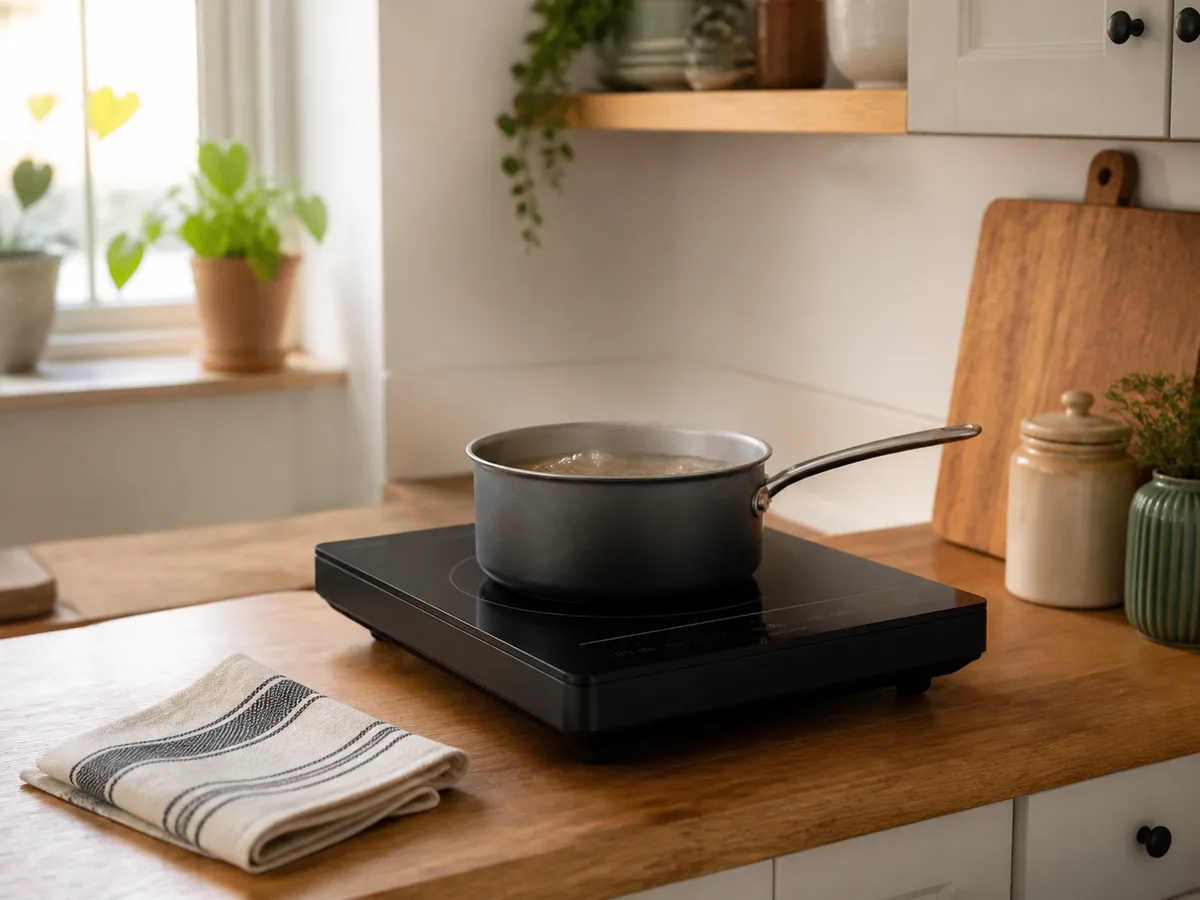
Our take: A single-zone induction burner with clear power steps and a stable glass surface is the best fit for most homes. Confirm magnetic cookware and circuit capacity before paying extra for precision modes.
Quick Picks by Household Need
Use these product types as a starting point. The right model still depends on measurements, compatibility, and the current details on the retailer or manufacturer page.
Best everyday extra burner
Single-zone induction burner
- Best for
- Soups, sautés, and temporary kitchen setups
- Tradeoff
- Requires magnetic cookware and nearby power
Best controlled cooking
Fine-step induction burner
- Best for
- Simmering, sauces, and repeatable heat changes
- Tradeoff
- More controls and a higher price
Best two-pan setup
Double induction cooktop
- Best for
- Kitchenettes with enough counter and circuit capacity
- Tradeoff
- Large footprint and heavier electrical demand
Comparison at a Glance
| Option | Best fit | Main compromise |
|---|---|---|
| Single-zone induction burner | Soups, sautés, and temporary kitchen setups | Requires magnetic cookware and nearby power |
| Fine-step induction burner | Simmering, sauces, and repeatable heat changes | More controls and a higher price |
| Double induction cooktop | Kitchenettes with enough counter and circuit capacity | Large footprint and heavier electrical demand |
What to Look For
Fit and placement
Measure the glass surface, control-panel depth, cord route, ventilation gap, and safe landing space for hot cookware.
Everyday performance
Check power-step behavior, pan-size guidance, low-heat cycling, and the weight the surface is designed to hold.
Upkeep and durability
Favor a wipe-clean surface while keeping fan vents clear of grease, crumbs, and surrounding objects.
Total cost and flexibility
Test existing pans with a magnet and confirm the outlet and circuit can support the published electrical load.
Buying Advice for Real Homes
Begin with the small apartment kitchen rather than the product page. Measure the available space, note nearby outlets or storage, and walk through the moment when you would actually use the a portable induction burner. A feature is valuable only when it removes friction from that routine.
Compare the three product types above by the compromise you can live with. Check the current dimensions, included accessories, warranty, return window, and care instructions on the manufacturer or retailer page before ordering; those details can change and often matter more than a long feature list.
When possible, test the decision with what you already own: mark the footprint with tape, notice the room's normal noise level, and identify who will clean, charge, store, or adjust the a portable induction burner. Buying for the least convenient day usually leads to a better long-term fit.
Mistakes Worth Avoiding
- Assuming every stainless-steel pan is induction compatible
- Sharing a loaded circuit with another high-draw appliance
- Blocking cooling vents against a backsplash
- Buying two zones for a counter that fits only one pan safely
How We Build This Guidance
We map the purchase to realistic rooms and routines, review the product category’s published specifications, identify compatibility and maintenance questions, and explain tradeoffs without manufacturing scores or personal experience. Product availability and features change, so verify current details before buying.
Frequently Asked Questions
How can I tell whether my cookware works?
A magnet should cling firmly to the flat base, but also check the burner maker’s diameter and material guidance.
Does induction stay cool?
The glass is not heated like a conventional element, but it becomes hot from the pan and still requires normal burn precautions.
Can it replace a stove?
It can support many one-pan routines, though oven cooking, multiple large pans, ventilation, and electrical limits may still require another setup.