You want outdoor coverage across more than one approach to the home, but monthly cloud fees and new power wiring are deal-breakers. A base-linked solar kit sounds ideal, provided the cameras can see useful sunlight and maintain a reliable network path.
Our take: Based on published specifications, the two-camera D1 Max kit is a strong match for subscription-averse households that want local storage and coordinated coverage. Skip it when mounting points are shaded, Wi-Fi is weak, or a wired NVR is preferred for continuous recording.
Quick Picks by Household Need
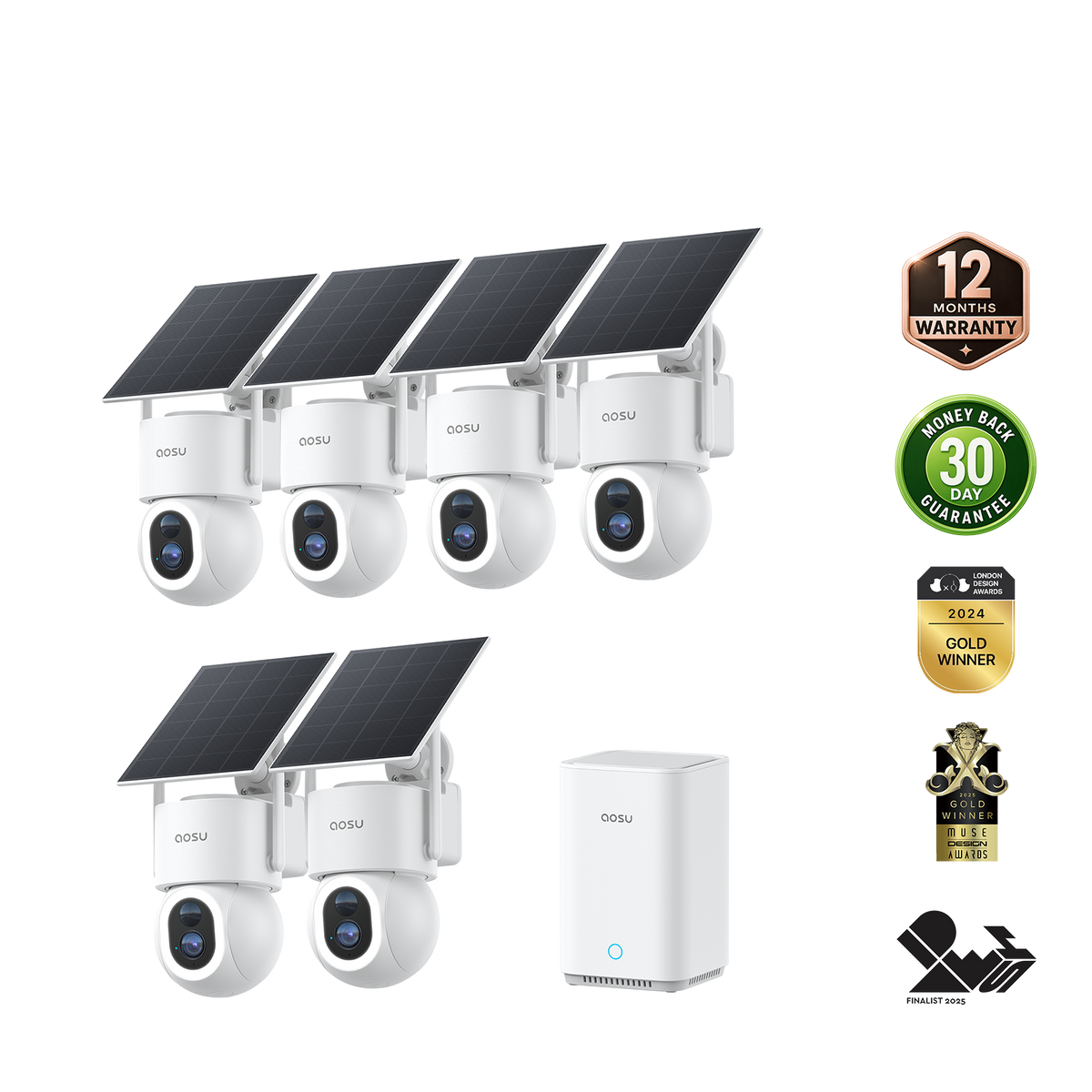
This guide focuses on the exact two-camera Amazon ASIN. The brand image represents the wider D1 Max family, so confirm the selected bundle before checkout.
Best for subscription-free whole-home coverage
aosu
D1 Max 4K Solar Camera Kit (2-Camera)
A strong fit for shoppers who want more coordinated coverage than a standalone camera. The base, cross-camera tracking, local storage, and solar design answer several common subscription and wiring objections in one system.
- Configuration
- 2 cameras plus aosuBase
- Video
- Seller-listed 4K
- Coverage
- 360° pan/tilt with smart tracking
- Storage
- Local storage; no subscription required
- Power
- Integrated solar charging
- Best for
- Homes that want two solar outdoor cameras, local recording, and coordinated tracking without a required subscription
Why it stands out
- Local storage with no required subscription
- Cross-camera tracking and 360° coverage
- Expandable kit options within the same product family
What to know
- Solar performance depends on installation and available light
- Confirm Wi-Fi reach, mounting height, storage capacity, and the exact two-camera bundle before checkout
Main tradeoff: Placement still needs useful sunlight and Wi-Fi/base coverage; the downloaded brand image shows the wider D1 Max family rather than only the two-camera box
Check price on AmazonComparison at a Glance
Camera resolution and tracking labels are manufacturer claims. Recording continuity, recognition accuracy, battery behavior, and wireless reliability vary with placement and conditions.
| Product | Best fit | Main tradeoff |
|---|---|---|
| aosu D1 Max 4K Solar Camera Kit (2-Camera) | Homes that want two solar outdoor cameras, local recording, and coordinated tracking without a required subscription | Placement still needs useful sunlight and Wi-Fi/base coverage; the downloaded brand image shows the wider D1 Max family rather than only the two-camera box |
What to Look For
Map the two views before buying
Choose mounting points that cover distinct paths rather than overlapping the same doorway. Include camera height, solar exposure, Wi-Fi signal, privacy boundaries, and a safe ladder route.
Understand what “no subscription” means
Local storage avoids a required cloud plan, but storage capacity, clip access, alerts, remote viewing, and optional services should still be checked in the current app and listing.
Treat solar as maintenance reduction
Solar charging can reduce manual charging, but shade, winter sun, temperature, event frequency, and panel angle still affect the energy balance.
Buying Advice for Real Homes
Use the two-camera kit when the base and cross-camera workflow solve a real coverage problem. A single standalone camera can be simpler for one door or side yard.
Before drilling, test the live view and signal at each intended position. Confirm whether the camera can exclude sidewalks, neighboring windows, or other areas that should not trigger alerts.
Check the exact storage device, mounting hardware, weather rating, return terms, and warranty supplied through the Amazon seller rather than assuming the brand-store policy automatically applies.
Mistakes Worth Avoiding
- Mounting in shade and expecting maintenance-free solar charging
- Covering the same angle with both cameras
- Assuming local storage means unlimited continuous recording
- Ignoring local privacy and recording rules
How We Build This Guidance
We map the purchase to realistic rooms and routines, review the product category’s published specifications, identify compatibility and maintenance questions, and explain tradeoffs without manufacturing scores or personal experience. Product availability and features change, so verify current details before buying.
For this comparison, we resolved every supplied PartnerBoost short link to its intended Amazon ASIN, checked the latest available PartnerBoost product snapshot, and cross-checked public Amazon and official brand sources. Seller and manufacturer claims are identified as such, and no numeric score is assigned.
Frequently Asked Questions
Does the aosu D1 Max require a subscription?
The manufacturer lists local storage and no required subscription. Confirm which alert, cloud, and remote-access features are included in the current app version.
Will the solar panel keep it charged all year?
Not necessarily. Available sunlight, temperature, camera activity, panel angle, and obstructions determine whether charging keeps pace with use.
Is this better than a wired security system?
It is easier to place where wiring is difficult, while a wired NVR may be preferable for continuous recording, predictable power, and more controlled local infrastructure.
Where are D1 Max recordings stored?
The system is sold around local storage through the aosuBase. Confirm the included storage, capacity limits, overwrite behavior, and export workflow for the exact bundle before buying.
How should I choose the two camera locations?
Use two distinct approaches to the property, then test live view, wireless signal, solar exposure, mounting clearance, and privacy boundaries at both positions before drilling.