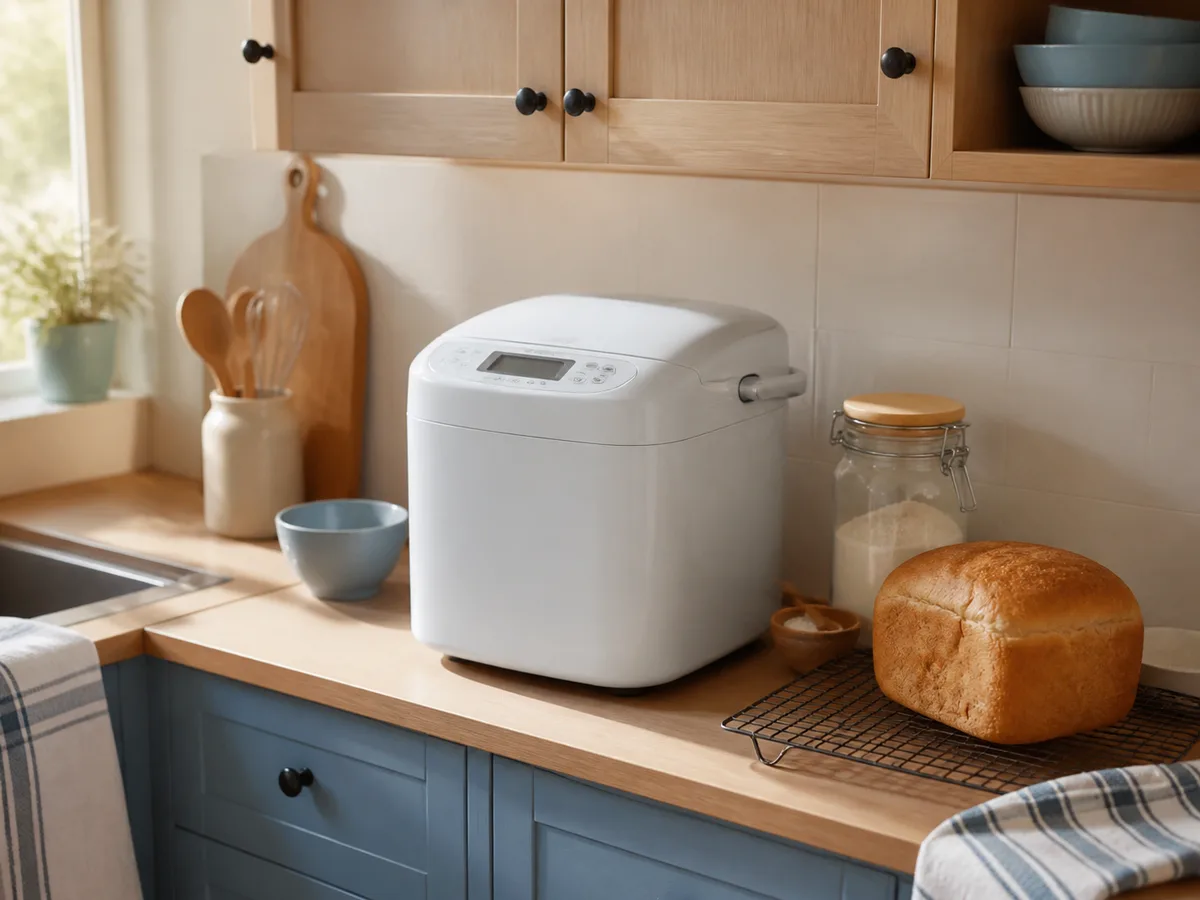
You want reliable sandwich bread without shaping dough by hand, but the machine must fit below the cabinets and avoid becoming a once-used storage problem.
Our take: A compact machine with one practical loaf size, a removable pan, and a clear basic cycle is the sensible starting point. Pay for specialty programs only when they match recipes you already plan to repeat.
Quick Picks by Household Need
Use these product types as a starting point. The right model still depends on measurements, compatibility, and the current details on the retailer or manufacturer page.
Best simple start
Compact basic bread machine
- Best for
- White, whole-wheat, and simple sandwich loaves
- Tradeoff
- Fewer loaf shapes and specialty programs
Best varied routine
Multi-program bread machine
- Best for
- Households alternating breads, dough, and jam cycles
- Tradeoff
- Larger menu and more settings to learn
Best dough helper
Bread machine with strong dough cycle
- Best for
- Bakers who shape rolls, pizza, or buns separately
- Tradeoff
- Still requires hands-on shaping and oven baking
Comparison at a Glance
| Option | Best fit | Main compromise |
|---|---|---|
| Compact basic bread machine | White, whole-wheat, and simple sandwich loaves | Fewer loaf shapes and specialty programs |
| Multi-program bread machine | Households alternating breads, dough, and jam cycles | Larger menu and more settings to learn |
| Bread machine with strong dough cycle | Bakers who shape rolls, pizza, or buns separately | Still requires hands-on shaping and oven baking |
What to Look For
Fit and placement
Measure lid lift, control visibility, steam clearance, pan-removal path, and a nearby storage location for accessories.
Everyday performance
Compare minimum and maximum loaf sizes, cycle duration, crust settings, and whether the baked shape suits normal slicing.
Upkeep and durability
Inspect the pan corners, paddle, shaft, and lid for realistic washing and complete drying between batches.
Total cost and flexibility
Check replacement-pan and paddle availability before paying for programs or dispensers that may see little use.
Buying Advice for Real Homes
Begin with the weekend kitchen rather than the product page. Measure the available space, note nearby outlets or storage, and walk through the moment when you would actually use the a bread machine. A feature is valuable only when it removes friction from that routine.
Compare the three product types above by the compromise you can live with. Check the current dimensions, included accessories, warranty, return window, and care instructions on the manufacturer or retailer page before ordering; those details can change and often matter more than a long feature list.
When possible, test the decision with what you already own: mark the footprint with tape, notice the room's normal noise level, and identify who will clean, charge, store, or adjust the a bread machine. Buying for the least convenient day usually leads to a better long-term fit.
Mistakes Worth Avoiding
- Choosing by program count instead of repeated recipes
- Forgetting the lid must open below upper cabinets
- Leaving the paddle seal damp after washing
- Expecting every flour substitution to work without recipe changes
How We Build This Guidance
We map the purchase to realistic rooms and routines, review the product category’s published specifications, identify compatibility and maintenance questions, and explain tradeoffs without manufacturing scores or personal experience. Product availability and features change, so verify current details before buying.
Frequently Asked Questions
Is a bread machine good for beginners?
It can simplify mixing, kneading, proofing, and baking when you follow a compatible recipe and measure ingredients carefully.
Do I need an ingredient dispenser?
Only if you regularly add fruit or nuts at a later stage and will not be nearby to add them manually.
Can I use it only for dough?
Many machines include a dough cycle, but confirm the intended batch size and finish shaping and baking according to the recipe.