Two people leave at different times, the counter is narrow, and nobody wants to wrestle a reservoir out from under a cabinet before coffee.
Our take: A small thermal drip maker suits shared mornings; a single-serve brewer fits staggered routines, while manual pour-over wins when storage and control matter most.
Quick Picks by Household Need
Use these product types as a starting point. The right model still depends on measurements, compatibility, and the current details on the retailer or manufacturer page.
Best shared pot
Compact thermal drip maker
- Best for
- Two to six cups kept warm without a hot plate
- Tradeoff
- Still needs reservoir and carafe clearance
Best staggered schedule
Small single-serve brewer
- Best for
- One mug at a time with minimal waiting
- Tradeoff
- Pods or repeated filling add cost and waste
Best minimal footprint
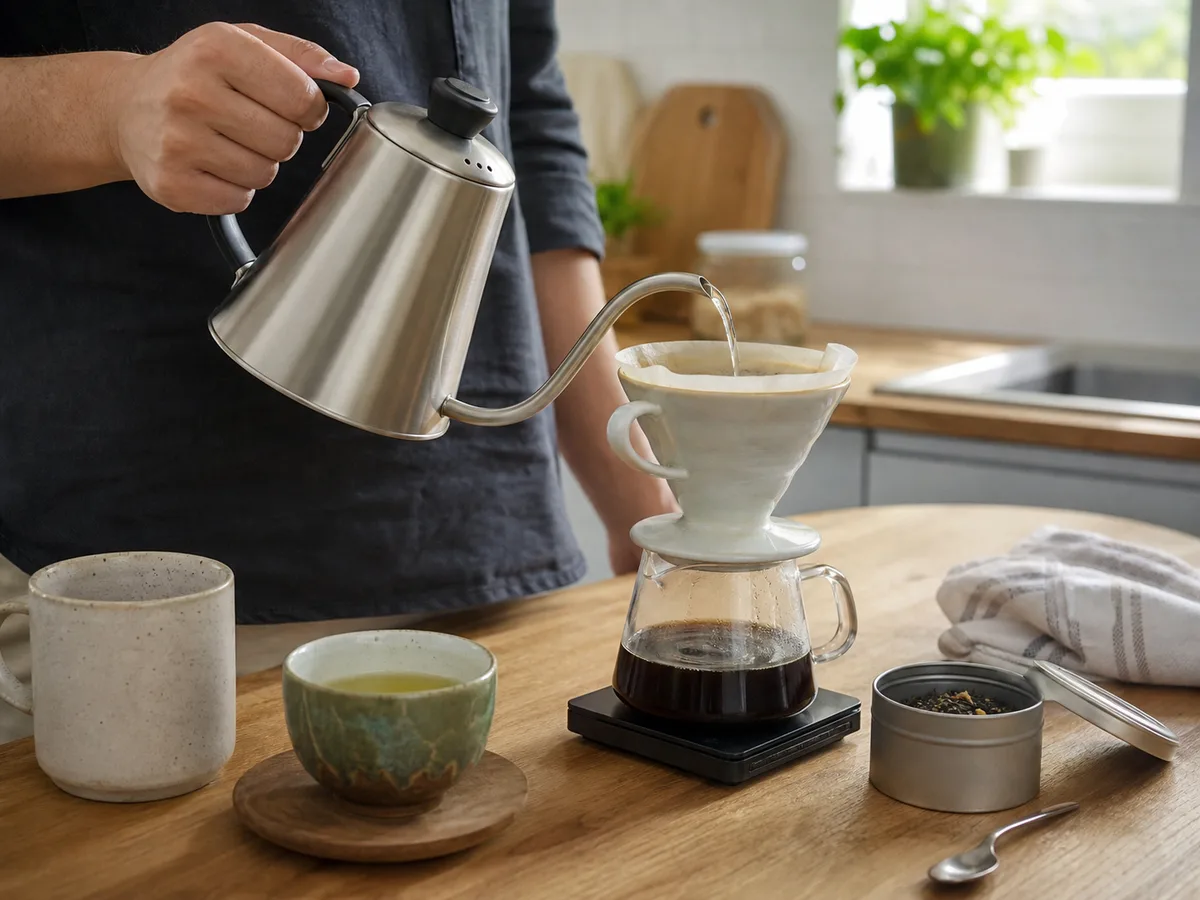
Pour-over cone and kettle
- Best for
- Readers who value control and easy storage
- Tradeoff
- Requires hands-on time each cup
Comparison at a Glance
| Option | Best fit | Main compromise |
|---|---|---|
| Compact thermal drip maker | Two to six cups kept warm without a hot plate | Still needs reservoir and carafe clearance |
| Small single-serve brewer | One mug at a time with minimal waiting | Pods or repeated filling add cost and waste |
| Pour-over cone and kettle | Readers who value control and easy storage | Requires hands-on time each cup |
What to Look For
Fit and placement
Measure lid lift, reservoir removal, mug height, and access below cabinets.
Everyday performance
Match brew volume and speed to the number of morning drinkers.
Upkeep and durability
Check whether the carafe, basket, reservoir, and drip tray are easy to reach.
Total cost and flexibility
Account for filters, pods, descaling supplies, and replacement carafes.
Buying Advice for Real Homes
Begin with the small breakfast nook rather than the product page. Measure the available space, note nearby outlets or storage, and walk through the moment when you would actually use the a compact coffee maker. A feature is valuable only when it removes friction from that routine.
Compare the three product types above by the compromise you can live with. Check the current dimensions, included accessories, warranty, return window, and care instructions on the manufacturer or retailer page before ordering; those details can change and often matter more than a long feature list.
When possible, test the decision with what you already own: mark the footprint with tape, notice the room's normal noise level, and identify who will clean, charge, store, or adjust the a compact coffee maker. Buying for the least convenient day usually leads to a better long-term fit.
Mistakes Worth Avoiding
- Measuring width but not lid height
- Buying a large carafe for one daily mug
- Ignoring descaling access
- Overlooking pod or filter cost
How We Build This Guidance
We map the purchase to realistic rooms and routines, review the product category’s published specifications, identify compatibility and maintenance questions, and explain tradeoffs without manufacturing scores or personal experience. Product availability and features change, so verify current details before buying.
Frequently Asked Questions
Is a thermal carafe worth it?
It keeps coffee warm without continued heating and suits households that drink the pot over time.
Do small machines brew weaker coffee?
Size alone does not decide strength; coffee-to-water ratio, temperature, and brew design matter.
How often should I descale?
Follow the maker’s guidance and adjust for water hardness and use frequency.