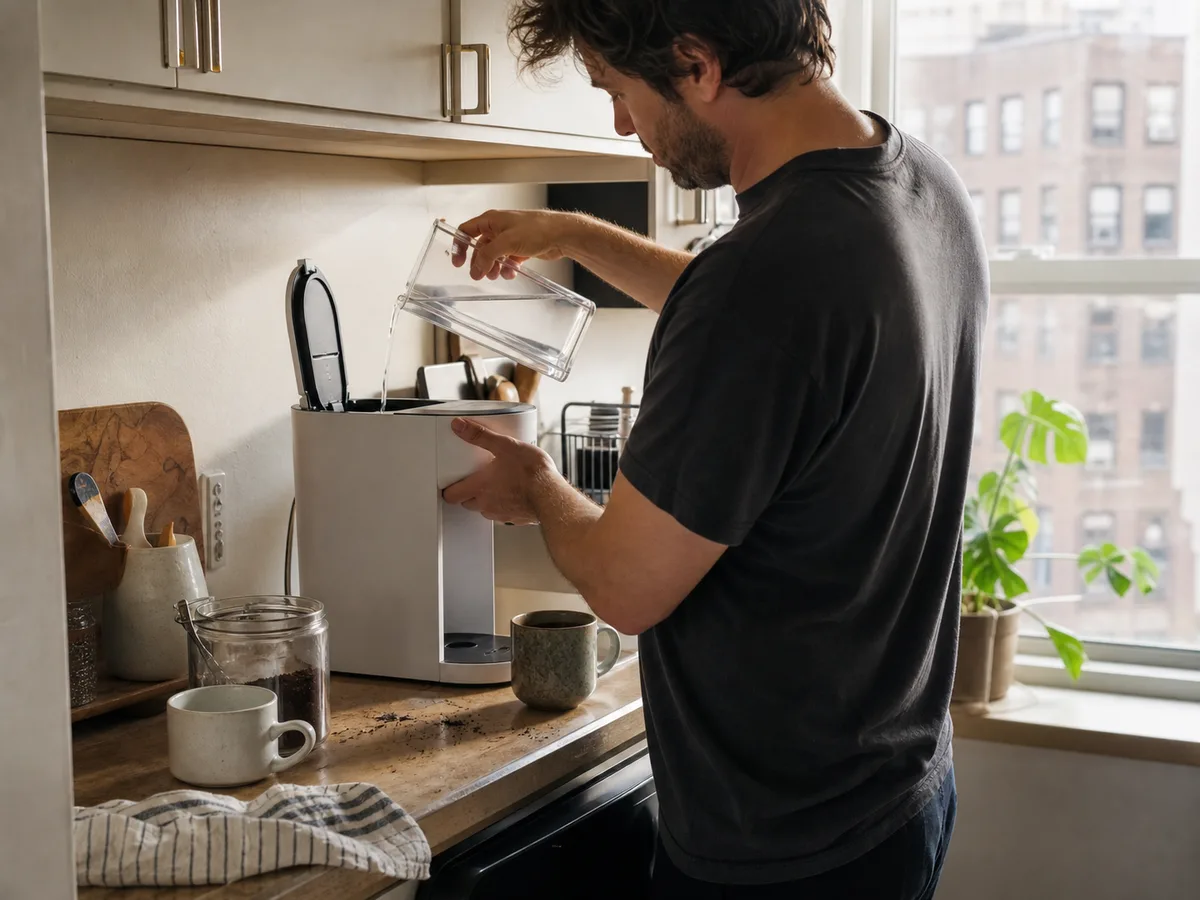
You leave before your roommate wakes and want a smoothie without sending a high-pitched motor through a shared wall.
Our take: A well-built personal blender is often quieter in practice because it runs briefly and makes one serving; enclosed full-size models help when batch capacity is essential.
Quick Picks by Household Need
Use these product types as a starting point. The right model still depends on measurements, compatibility, and the current details on the retailer or manufacturer page.
Best short routine
Personal cup blender
- Best for
- Single smoothies and fast cleanup
- Tradeoff
- Limited capacity and ingredient order matters
Best family capacity
Variable-speed full-size blender
- Best for
- Soups, sauces, and larger batches
- Tradeoff
- More motor noise and cleanup
Best noise control
Sound-enclosure blender
- Best for
- Frequent blending near bedrooms
- Tradeoff
- Bulky and expensive
Comparison at a Glance
| Option | Best fit | Main compromise |
|---|---|---|
| Personal cup blender | Single smoothies and fast cleanup | Limited capacity and ingredient order matters |
| Variable-speed full-size blender | Soups, sauces, and larger batches | More motor noise and cleanup |
| Sound-enclosure blender | Frequent blending near bedrooms | Bulky and expensive |
What to Look For
Fit and placement
Leave room for the jar, lid, and any sound enclosure under cabinets.
Everyday performance
Compare low-speed control and cycle time, not wattage alone.
Upkeep and durability
Inspect blade-base seals and whether cups, lids, and gaskets separate for cleaning.
Total cost and flexibility
Price replacement cups, blade assemblies, and warranty coverage.
Buying Advice for Real Homes
Begin with the apartment kitchen rather than the product page. Measure the available space, note nearby outlets or storage, and walk through the moment when you would actually use the a blender. A feature is valuable only when it removes friction from that routine.
Compare the three product types above by the compromise you can live with. Check the current dimensions, included accessories, warranty, return window, and care instructions on the manufacturer or retailer page before ordering; those details can change and often matter more than a long feature list.
When possible, test the decision with what you already own: mark the footprint with tape, notice the room's normal noise level, and identify who will clean, charge, store, or adjust the a blender. Buying for the least convenient day usually leads to a better long-term fit.
Mistakes Worth Avoiding
- Equating lower wattage with lower noise
- Blending ice against a shared wall
- Overfilling a personal cup
- Ignoring replacement seals and cups
How We Build This Guidance
We map the purchase to realistic rooms and routines, review the product category’s published specifications, identify compatibility and maintenance questions, and explain tradeoffs without manufacturing scores or personal experience. Product availability and features change, so verify current details before buying.
Frequently Asked Questions
Are quiet blenders truly quiet?
They still make motor and ingredient noise; enclosures and shorter cycles reduce rather than eliminate it.
Does a rubber mat help?
A stable appliance mat can reduce vibration on a hard counter, provided ventilation remains clear.
Is a personal blender enough?
It is for one serving and softer ingredients; frequent frozen, fibrous, or batch recipes may need more control.