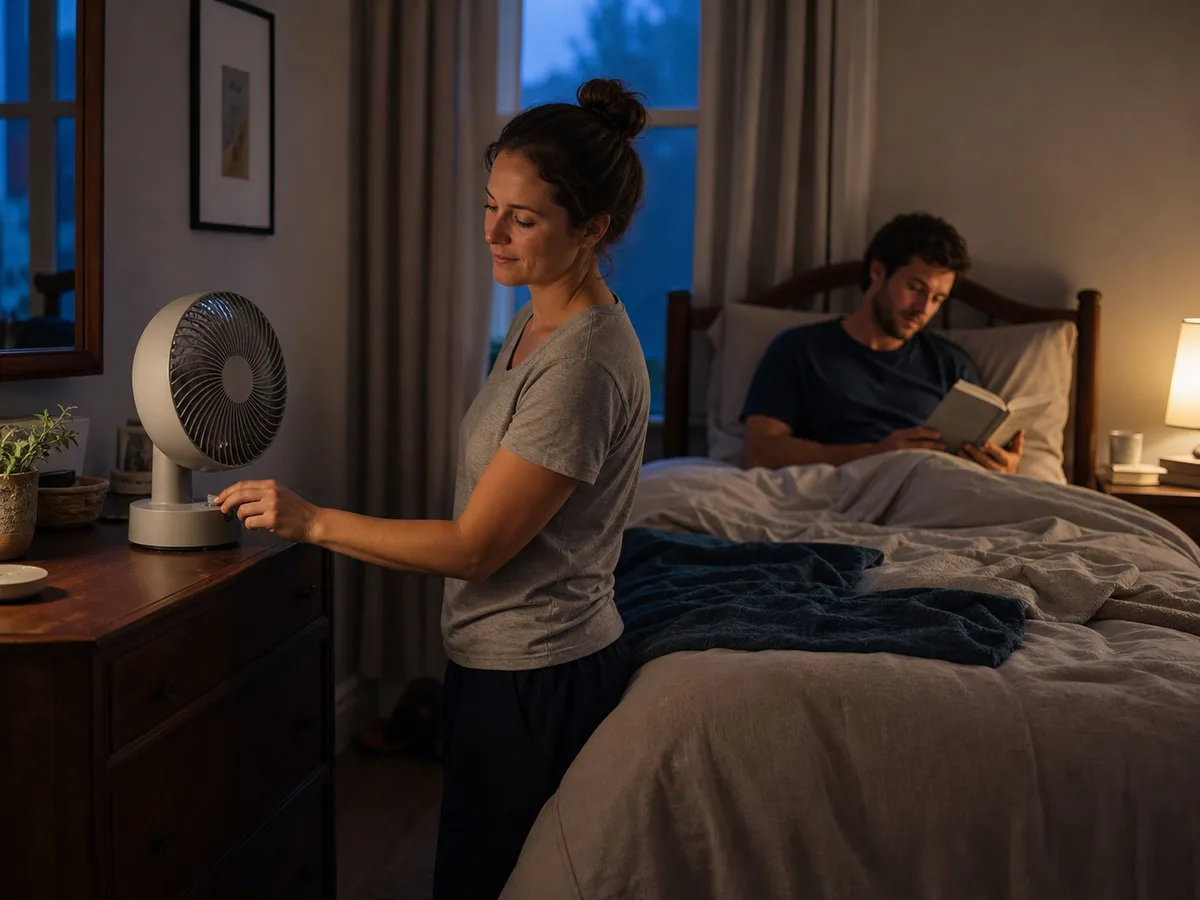
The room feels stale at night, one sleeper wants airflow and the other dislikes a strong draft, while street noise already makes sleep fragile.
Our take: A quiet circulator with several low settings works for most bedrooms; a tower fan saves floor width, while a bedside fan is better for personal airflow.
Quick Picks by Household Need
Use these product types as a starting point. The right model still depends on measurements, compatibility, and the current details on the retailer or manufacturer page.
Best room circulation
Compact air circulator
- Best for
- Moving air across a small or medium bedroom
- Tradeoff
- Focused airflow needs thoughtful placement
Best narrow footprint
Tower fan
- Best for
- Rooms with little floor width
- Tradeoff
- More internal surfaces to clean
Best personal breeze
Small bedside fan
- Best for
- One sleeper or a desk-bed combination
- Tradeoff
- Limited whole-room circulation
Comparison at a Glance
| Option | Best fit | Main compromise |
|---|---|---|
| Compact air circulator | Moving air across a small or medium bedroom | Focused airflow needs thoughtful placement |
| Tower fan | Rooms with little floor width | More internal surfaces to clean |
| Small bedside fan | One sleeper or a desk-bed combination | Limited whole-room circulation |
What to Look For
Fit and placement
Plan a stable location that keeps intake, cord, and oscillation clear.
Everyday performance
Prioritize low-speed sound character, control lights, and usable airflow range.
Upkeep and durability
Check grille removal, blade access, and dust-cleaning instructions.
Total cost and flexibility
Compare timers, remote replacement, power draw, and warranty.
Buying Advice for Real Homes
Begin with the quiet bedroom rather than the product page. Measure the available space, note nearby outlets or storage, and walk through the moment when you would actually use the a portable fan. A feature is valuable only when it removes friction from that routine.
Compare the three product types above by the compromise you can live with. Check the current dimensions, included accessories, warranty, return window, and care instructions on the manufacturer or retailer page before ordering; those details can change and often matter more than a long feature list.
When possible, test the decision with what you already own: mark the footprint with tape, notice the room's normal noise level, and identify who will clean, charge, store, or adjust the a portable fan. Buying for the least convenient day usually leads to a better long-term fit.
Mistakes Worth Avoiding
- Judging noise only at maximum speed
- Pointing strong airflow at one sleeper
- Choosing bright controls for a dark room
- Letting dust build behind a sealed grille
How We Build This Guidance
We map the purchase to realistic rooms and routines, review the product category’s published specifications, identify compatibility and maintenance questions, and explain tradeoffs without manufacturing scores or personal experience. Product availability and features change, so verify current details before buying.
Frequently Asked Questions
Does a fan cool the room?
It improves perceived comfort through air movement but does not lower room temperature like air conditioning.
Is a tower fan quieter?
Shape alone does not guarantee it; compare low-speed sound and airflow behavior.
Where should it go?
Place it where circulation reaches occupied space without blocked intake or an uncomfortable direct draft.