A bedroom feels stuffy overnight, cooking odors linger, or a basement swings between damp and dry. You want evidence that helps change a routine rather than another screen full of unexplained numbers.
Our take: For most households, temperature, relative humidity, and carbon dioxide trends are the most actionable starting point; particle monitoring becomes important around smoke, cooking, workshops, or outdoor pollution. Treat consumer readings as guidance, not medical diagnosis.
Quick Picks by Household Need
Use these product types as a starting point. The right model still depends on measurements, compatibility, and the current details on the retailer or manufacturer page.
Best everyday baseline
CO₂, temperature, and humidity monitor
- Best for
- Bedrooms, offices, and ventilation decisions
- Tradeoff
- Does not identify particles or specific chemicals
Best for smoke and cooking
PM2.5-focused monitor
- Best for
- Kitchens, wildfire regions, and filtration checks
- Tradeoff
- Particle readings do not explain the source
Best broad trend view
Multi-sensor monitor
- Best for
- Readers willing to learn several metrics
- Tradeoff
- More data, higher cost, and variable sensor quality
Comparison at a Glance
| Option | Best fit | Main compromise |
|---|---|---|
| CO₂, temperature, and humidity monitor | Bedrooms, offices, and ventilation decisions | Does not identify particles or specific chemicals |
| PM2.5-focused monitor | Kitchens, wildfire regions, and filtration checks | Particle readings do not explain the source |
| Multi-sensor monitor | Readers willing to learn several metrics | More data, higher cost, and variable sensor quality |
What to Look For
Sensor type
Confirm whether a listed measurement comes from a real sensor or an estimate calculated from another value.
Calibration and drift
Consumer sensors change over time. Look for documented calibration, replacement, or comparison guidance.
Display and history
A clear current reading helps in the room; trend history reveals whether cooking, sleep, weather, or occupancy drives the pattern.
Action threshold
Before buying, decide what action each metric can trigger, such as opening a window or running a verified filter.
Buying Advice for Real Homes
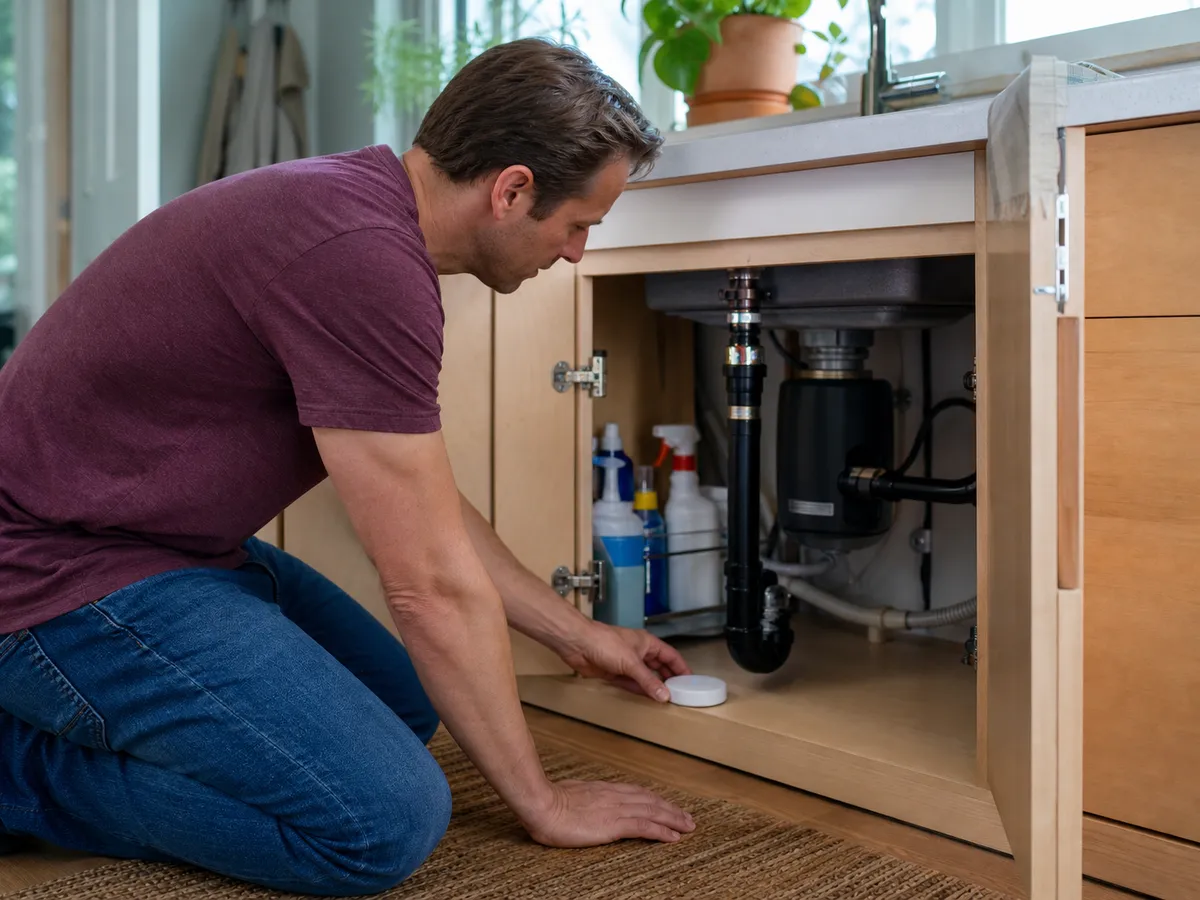
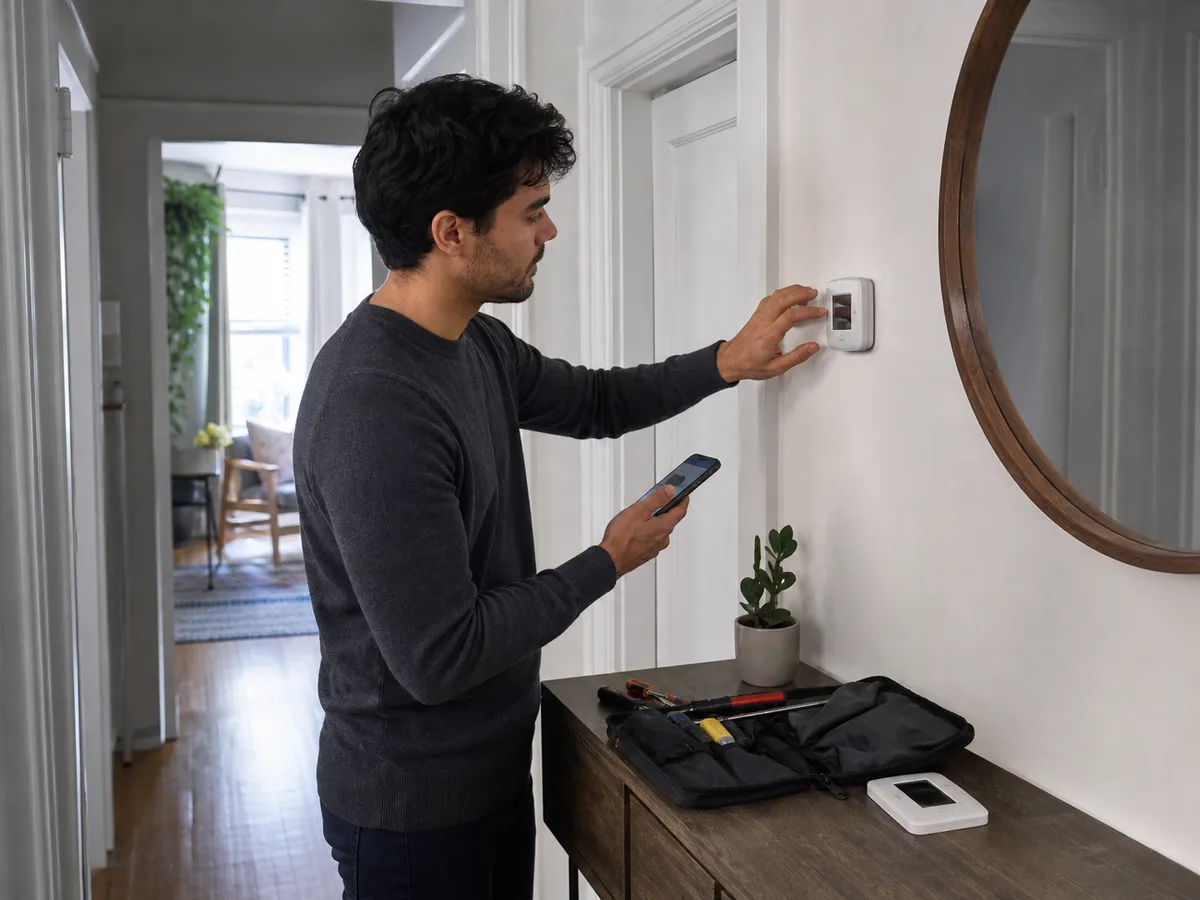
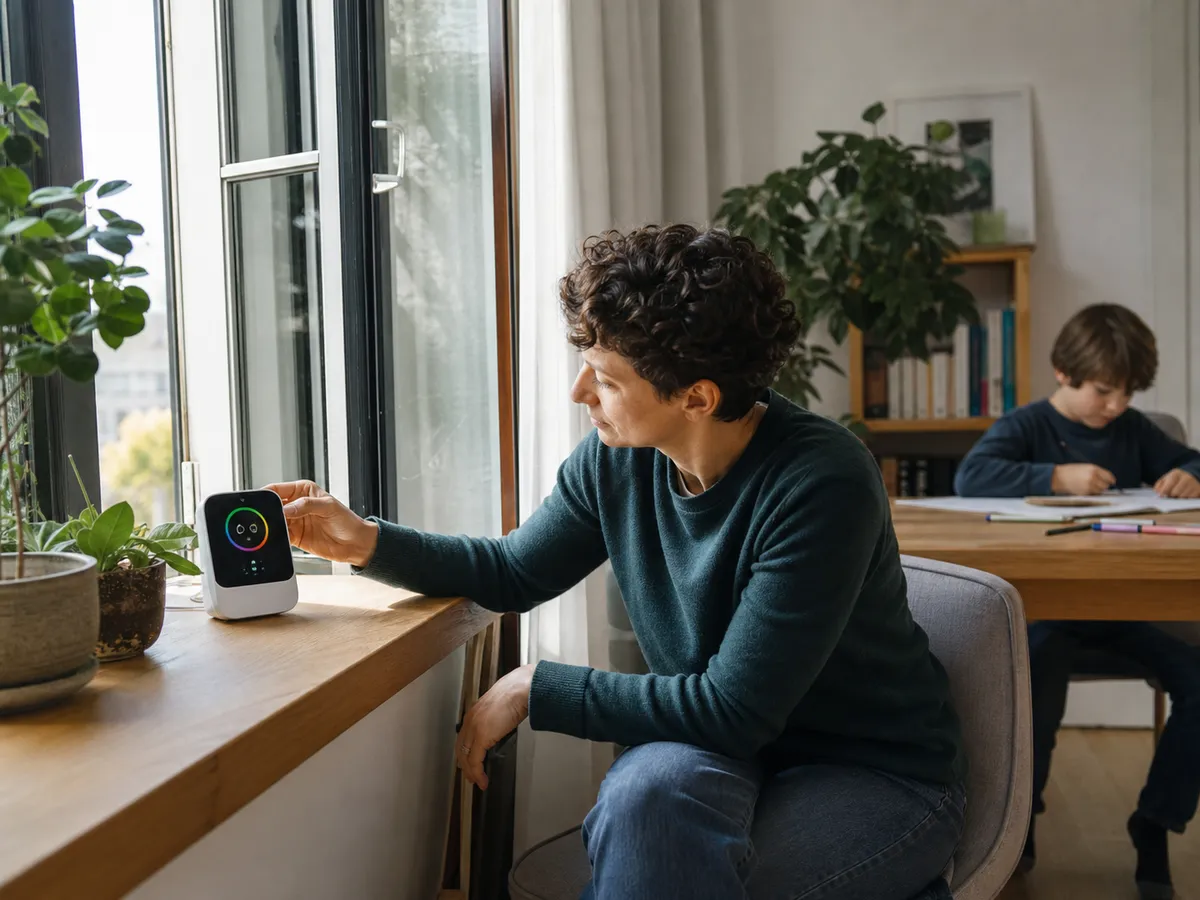
Place the monitor at breathing height away from direct windows, vents, stoves, humidifiers, and purifiers. Extreme proximity can exaggerate one source and hide the room pattern.
Watch trends across several ordinary days before reacting to one spike. Note cooking, showers, cleaning, outdoor smoke, occupancy, and open-window periods.
Use the monitor to test one change at a time. Ventilate during cooking, adjust humidity, or move filtration, then compare similar periods rather than chasing every fluctuation.
Mistakes Worth Avoiding
- Treating a consumer monitor as a medical device
- Buying metrics without knowing what action they support
- Placing the sensor beside a vent
- Comparing unlike sensor technologies as if they were laboratory equivalents
How We Build This Guidance
We map the purchase to realistic rooms and routines, review the product category’s published specifications, identify compatibility and maintenance questions, and explain tradeoffs without manufacturing scores or personal experience. Product availability and features change, so verify current details before buying.
Frequently Asked Questions
Is CO₂ the same as carbon monoxide?
No. They require different sensors and responses. A home air-quality monitor does not replace required carbon-monoxide alarms.
What humidity is best?
Comfort and building needs vary with climate and season. Use trends and local guidance rather than one universal target.
Can a monitor tell me which pollutant is present?
Most consumer monitors report broad categories such as particles or estimated volatile compounds, not a precise chemical identification.