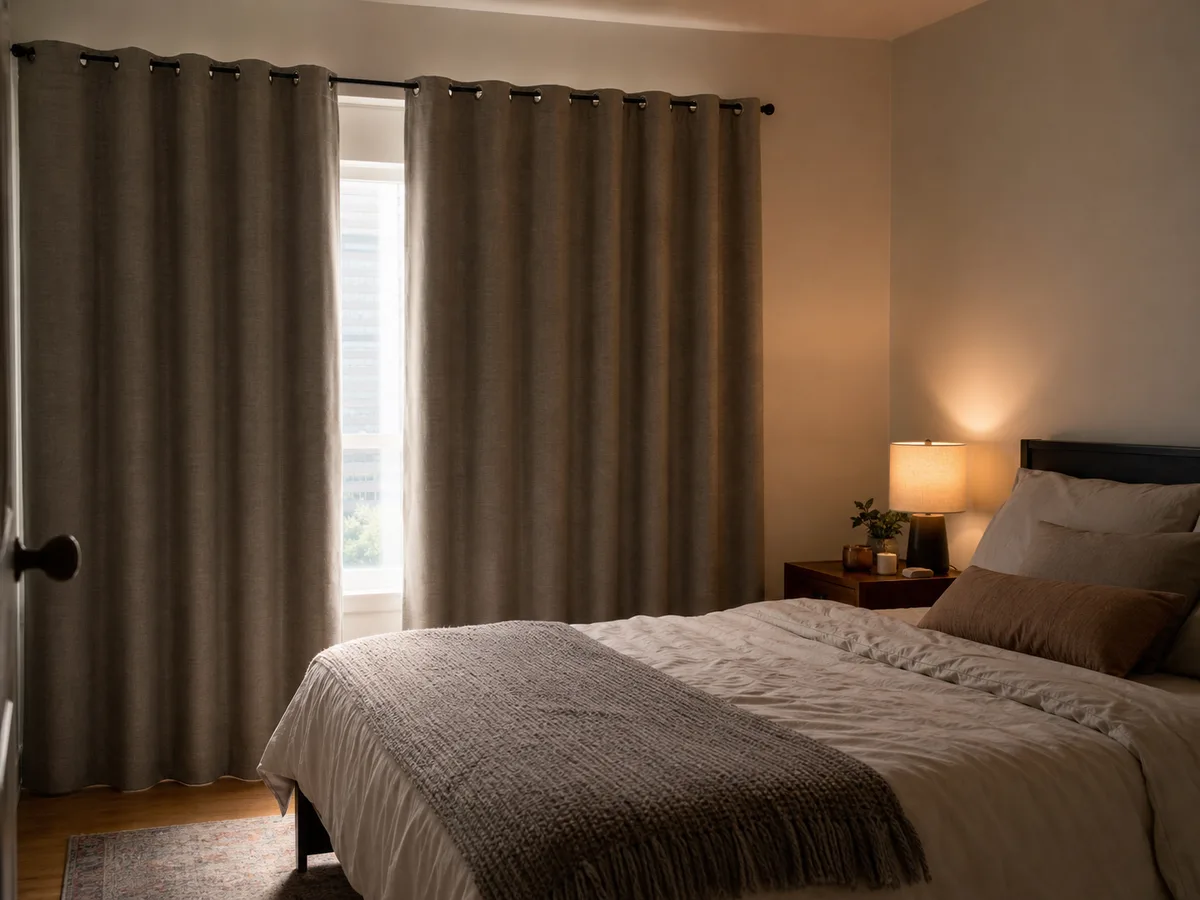
A streetlight reaches the pillow at night and afternoon sun warms the room, but the rental walls limit how far hardware can move.
Our take: Use wide panels mounted above and beyond the frame where permitted; for rentals, pair dense curtains with reversible side-gap solutions rather than relying on a “blackout” label alone.
Quick Picks by Household Need
Use these product types as a starting point. The right model still depends on measurements, compatibility, and the current details on the retailer or manufacturer page.
Best full coverage
Wide lined blackout panels
- Best for
- Permanent bedrooms with mounting flexibility
- Tradeoff
- More fabric and stronger hardware
Best rental approach
Tension or existing-rod panels
- Best for
- No-drill situations
- Tradeoff
- More edge light leakage
Best thermal layer
Curtain plus cellular shade
- Best for
- Hot or cold exposed windows
- Tradeoff
- Higher cost and two treatments to operate
Comparison at a Glance
| Option | Best fit | Main compromise |
|---|---|---|
| Wide lined blackout panels | Permanent bedrooms with mounting flexibility | More fabric and stronger hardware |
| Tension or existing-rod panels | No-drill situations | More edge light leakage |
| Curtain plus cellular shade | Hot or cold exposed windows | Higher cost and two treatments to operate |
What to Look For
Fit and placement
Measure rod position, return depth, floor clearance, and panel fullness.
Everyday performance
Look at construction, lining, color, and edge coverage rather than marketing percentage alone.
Upkeep and durability
Choose washable or realistically cleanable fabric and suitable hardware.
Total cost and flexibility
Include rods, brackets, rings, tiebacks, and possible move-out repair.
Buying Advice for Real Homes
Begin with the sunlit bedroom rather than the product page. Measure the available space, note nearby outlets or storage, and walk through the moment when you would actually use the blackout curtains. A feature is valuable only when it removes friction from that routine.
Compare the three product types above by the compromise you can live with. Check the current dimensions, included accessories, warranty, return window, and care instructions on the manufacturer or retailer page before ordering; those details can change and often matter more than a long feature list.
When possible, test the decision with what you already own: mark the footprint with tape, notice the room's normal noise level, and identify who will clean, charge, store, or adjust the blackout curtains. Buying for the least convenient day usually leads to a better long-term fit.
Mistakes Worth Avoiding
- Buying panels equal to window width
- Mounting inside a leaky frame
- Ignoring the center overlap
- Choosing heavy panels for weak hardware
How We Build This Guidance
We map the purchase to realistic rooms and routines, review the product category’s published specifications, identify compatibility and maintenance questions, and explain tradeoffs without manufacturing scores or personal experience. Product availability and features change, so verify current details before buying.
Frequently Asked Questions
Do dark colors block more light?
Construction and lining matter most, though very light faces may reveal more glow.
Will blackout curtains cool a room?
They can reduce solar gain when closed, but window type, gaps, and climate affect results.
How long should panels be?
They should cover the opening fully without creating a trip or cleaning problem.