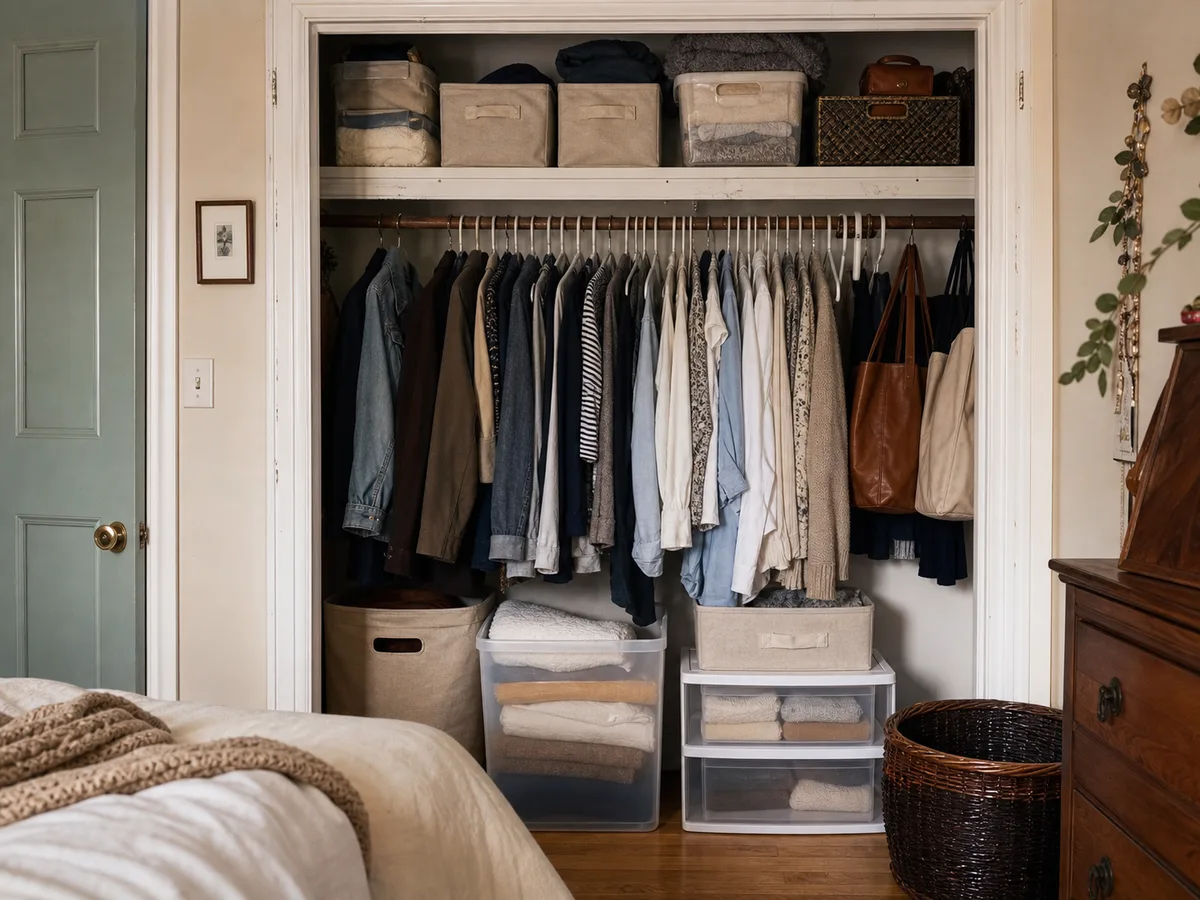
Seasonal clothes share one shelf with linens and travel gear, and every search for a scarf pulls three unlabelled boxes down.
Our take: Use shallow labeled bins for frequently rotated items and transparent or front-opening containers only where visibility truly saves time.
Quick Picks by Household Need
Use these product types as a starting point. The right model still depends on measurements, compatibility, and the current details on the retailer or manufacturer page.
Best flexible system
Labeled open-top bins
- Best for
- Reachable shelves and weekly items
- Tradeoff
- Contents can gather dust
Best seasonal protection
Lidded stackable bins
- Best for
- Longer-term textiles and gear
- Tradeoff
- Bottom bins are harder to access
Best high shelf
Lightweight handled bins
- Best for
- Occasional items above eye level
- Tradeoff
- Lower rigidity and capacity
Comparison at a Glance
| Option | Best fit | Main compromise |
|---|---|---|
| Labeled open-top bins | Reachable shelves and weekly items | Contents can gather dust |
| Lidded stackable bins | Longer-term textiles and gear | Bottom bins are harder to access |
| Lightweight handled bins | Occasional items above eye level | Lower rigidity and capacity |
What to Look For
Fit and placement
Measure shelf depth, clear door opening, and the safest lifting height.
Everyday performance
Match bin depth to how often an item must be found and returned.
Upkeep and durability
Choose smooth, cleanable materials and avoid trapping damp textiles.
Total cost and flexibility
A consistent modular size is easier to replace and rearrange later.
Buying Advice for Real Homes
Begin with the small bedroom closet rather than the product page. Measure the available space, note nearby outlets or storage, and walk through the moment when you would actually use the closet storage bins. A feature is valuable only when it removes friction from that routine.
Compare the three product types above by the compromise you can live with. Check the current dimensions, included accessories, warranty, return window, and care instructions on the manufacturer or retailer page before ordering; those details can change and often matter more than a long feature list.
When possible, test the decision with what you already own: mark the footprint with tape, notice the room's normal noise level, and identify who will clean, charge, store, or adjust the closet storage bins. Buying for the least convenient day usually leads to a better long-term fit.
Mistakes Worth Avoiding
- Using deep bins for small loose items
- Stacking heavy containers overhead
- Labeling categories too broadly
- Packing clothes before fully dry
How We Build This Guidance
We map the purchase to realistic rooms and routines, review the product category’s published specifications, identify compatibility and maintenance questions, and explain tradeoffs without manufacturing scores or personal experience. Product availability and features change, so verify current details before buying.
Frequently Asked Questions
Are clear bins better?
They help visibility, but labels and sensible categories often work just as well.
How full should a bin be?
Leave enough space to return items without unpacking the whole container.
Should fabric bins store seasonal clothes?
Only in a dry, clean location where dust and pests are controlled.