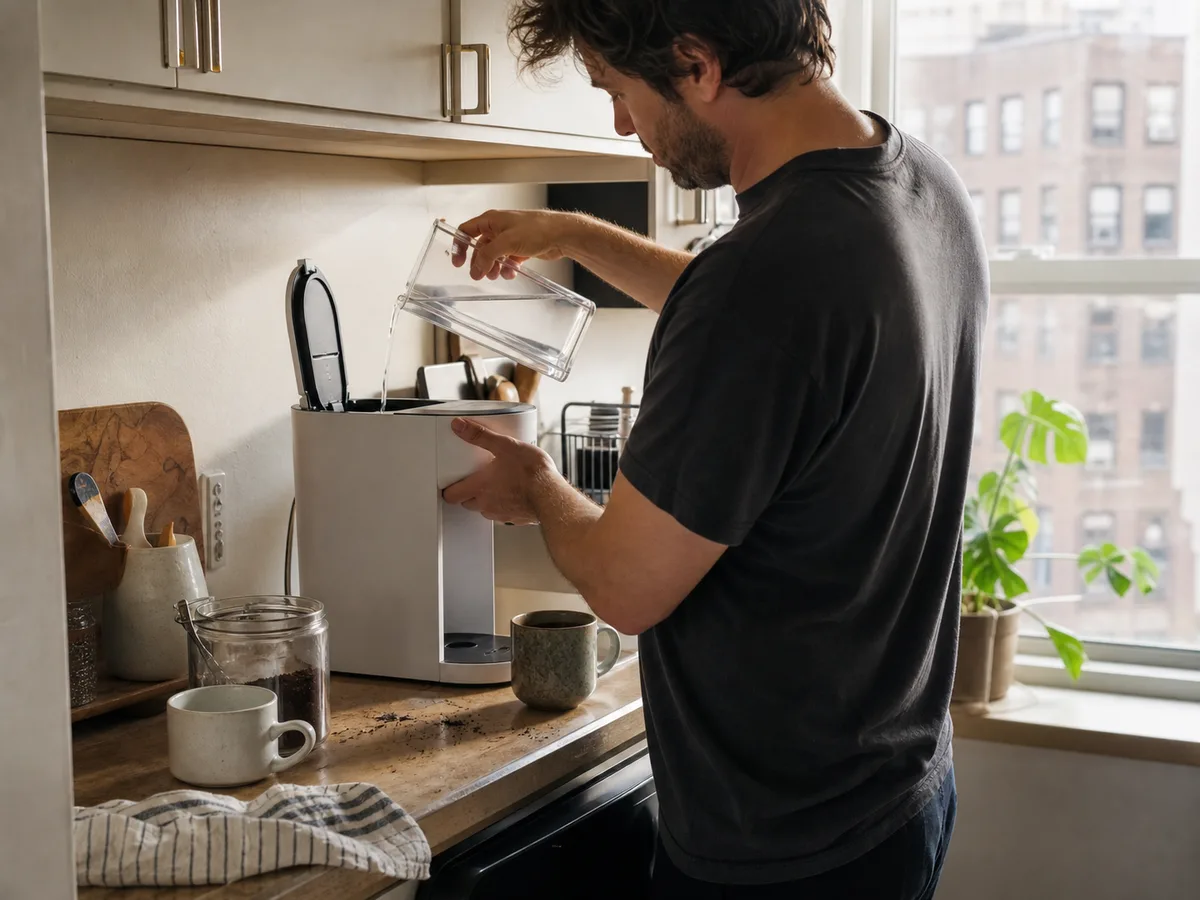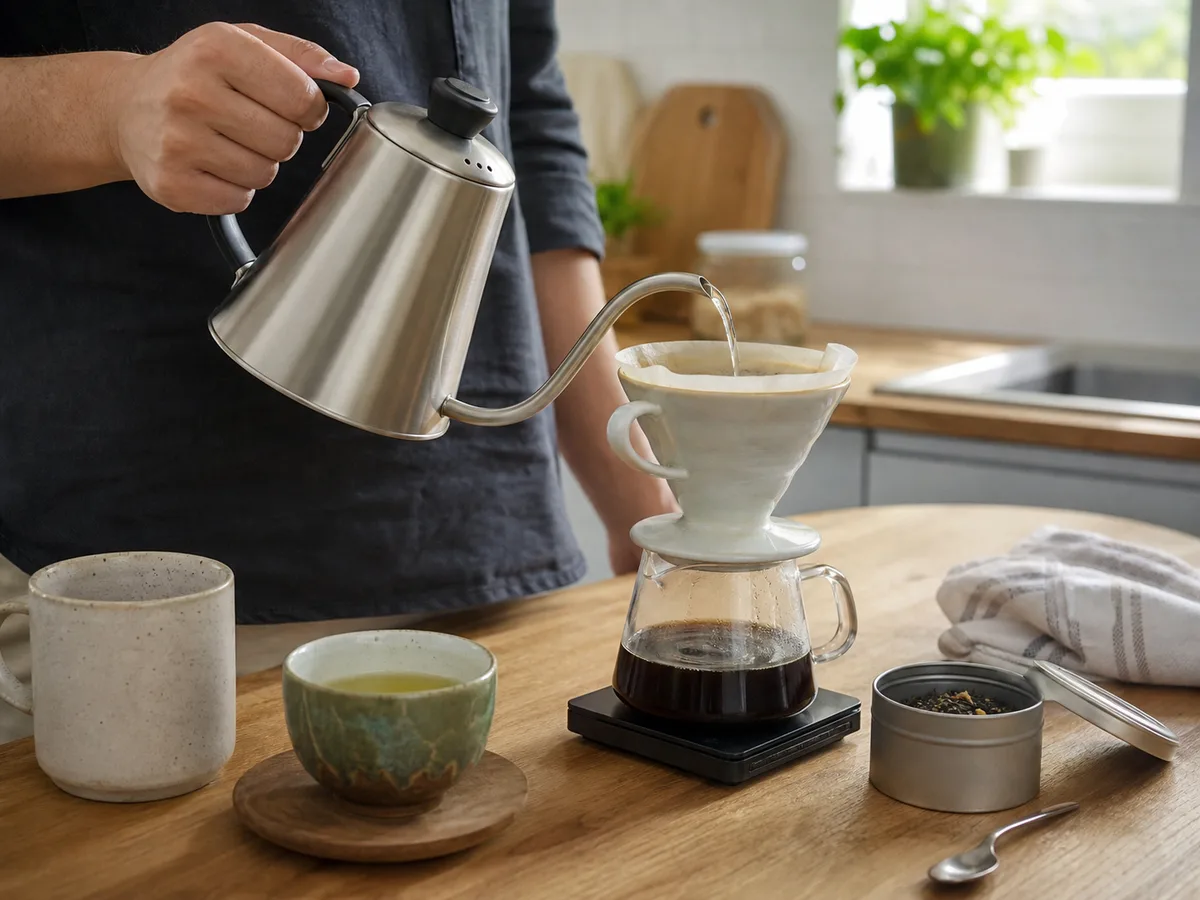
One person makes green tea, another uses a pour-over, and the kettle must be safe and obvious enough for visiting family to use.
Our take: Choose variable temperature for specialty tea or coffee; otherwise a simple one-button kettle with a good handle and wide lid is the better value.
Quick Picks by Household Need
Use these product types as a starting point. The right model still depends on measurements, compatibility, and the current details on the retailer or manufacturer page.
Best simple boil
One-button kettle
- Best for
- Fast everyday hot water
- Tradeoff
- No temperature choice
Best beverage control
Variable-temperature kettle
- Best for
- Tea and pour-over households
- Tradeoff
- Higher cost and more controls
Best precise pour
Gooseneck kettle
- Best for
- Manual coffee brewing
- Tradeoff
- Slower pour for filling large pots
Comparison at a Glance
| Option | Best fit | Main compromise |
|---|---|---|
| One-button kettle | Fast everyday hot water | No temperature choice |
| Variable-temperature kettle | Tea and pour-over households | Higher cost and more controls |
| Gooseneck kettle | Manual coffee brewing | Slower pour for filling large pots |
What to Look For
Fit and placement
Check handle clearance, base diameter, cord storage, and fill opening.
Everyday performance
Look for clear controls, hold-temperature behavior, and a predictable pour.
Upkeep and durability
A wide lid and accessible interior make mineral scale easier to remove.
Total cost and flexibility
Compare warranty, filter availability, and whether temperature features justify the premium.
Buying Advice for Real Homes
Begin with the shared kitchen rather than the product page. Measure the available space, note nearby outlets or storage, and walk through the moment when you would actually use the an electric kettle. A feature is valuable only when it removes friction from that routine.
Compare the three product types above by the compromise you can live with. Check the current dimensions, included accessories, warranty, return window, and care instructions on the manufacturer or retailer page before ordering; those details can change and often matter more than a long feature list.
When possible, test the decision with what you already own: mark the footprint with tape, notice the room's normal noise level, and identify who will clean, charge, store, or adjust the an electric kettle. Buying for the least convenient day usually leads to a better long-term fit.
Mistakes Worth Avoiding
- Buying more capacity than anyone lifts comfortably
- Choosing a gooseneck for fast pot filling
- Ignoring minimum fill level
- Letting scale build around the sensor
How We Build This Guidance
We map the purchase to realistic rooms and routines, review the product category’s published specifications, identify compatibility and maintenance questions, and explain tradeoffs without manufacturing scores or personal experience. Product availability and features change, so verify current details before buying.
Frequently Asked Questions
Is variable temperature necessary?
Only when you regularly prepare drinks that benefit from different water temperatures.
Are glass kettles easier to clean?
They show scale clearly, but shape and lid access matter more than material alone.
Can I heat milk in it?
Usually no; kettles are generally designed for water unless the manufacturer explicitly says otherwise.