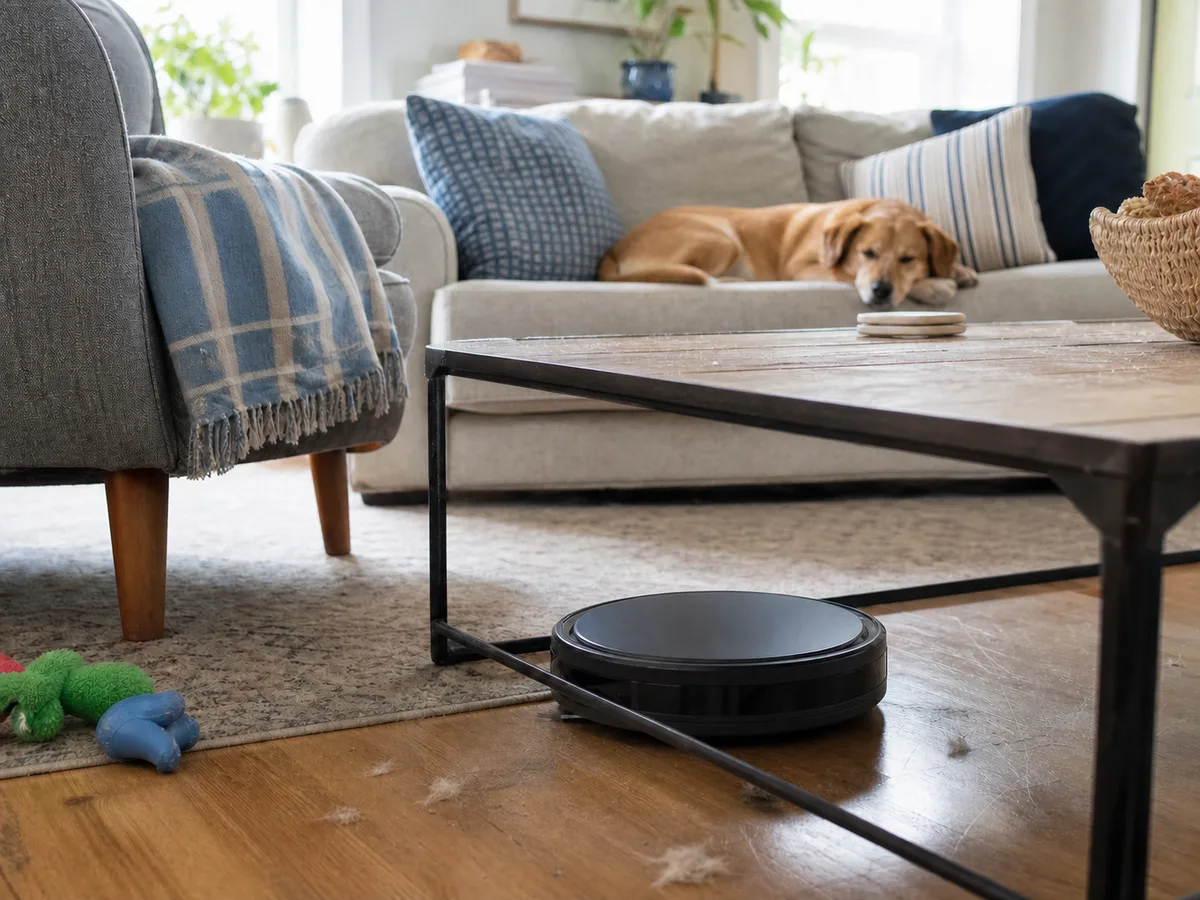
Dog hair gathers under the sofa between weekend cleanings, but toys, chair legs, and a raised threshold make the floor more complicated than a showroom.
Our take: Choose reliable navigation and an easy-clean brush before premium mopping features. A self-empty dock helps high-shedding homes only when there is a sensible place for it.
Quick Picks by Household Need
Use these product types as a starting point. The right model still depends on measurements, compatibility, and the current details on the retailer or manufacturer page.
Best straightforward cleanup
Navigation-focused robot vacuum
- Best for
- Daily hard-floor and low-pile pickup
- Tradeoff
- Bin needs frequent emptying
Best shedding household
Self-empty robot vacuum
- Best for
- Pets that fill a small bin quickly
- Tradeoff
- Large dock and ongoing bag cost
Best mixed floors
Vacuum-mop combination
- Best for
- Hard floors with light maintenance mopping
- Tradeoff
- More pads, tanks, and upkeep
Comparison at a Glance
| Option | Best fit | Main compromise |
|---|---|---|
| Navigation-focused robot vacuum | Daily hard-floor and low-pile pickup | Bin needs frequent emptying |
| Self-empty robot vacuum | Pets that fill a small bin quickly | Large dock and ongoing bag cost |
| Vacuum-mop combination | Hard floors with light maintenance mopping | More pads, tanks, and upkeep |
What to Look For
Fit and placement
Measure furniture clearance, thresholds, narrow passages, and dock footprint.
Everyday performance
Evaluate navigation method, brush design, and obstacle settings for the home.
Upkeep and durability
Check hair removal, filter access, bin handling, and dock cleaning.
Total cost and flexibility
Include bags, filters, brushes, pads, batteries, and app longevity.
Buying Advice for Real Homes
Begin with the pet-friendly living room rather than the product page. Measure the available space, note nearby outlets or storage, and walk through the moment when you would actually use the a robot vacuum. A feature is valuable only when it removes friction from that routine.
Compare the three product types above by the compromise you can live with. Check the current dimensions, included accessories, warranty, return window, and care instructions on the manufacturer or retailer page before ordering; those details can change and often matter more than a long feature list.
When possible, test the decision with what you already own: mark the footprint with tape, notice the room's normal noise level, and identify who will clean, charge, store, or adjust the a robot vacuum. Buying for the least convenient day usually leads to a better long-term fit.
Mistakes Worth Avoiding
- Buying before measuring thresholds
- Expecting obstacle AI to replace floor pickup
- Ignoring hair wrapped on side brushes
- Placing the dock in a cramped corner
How We Build This Guidance
We map the purchase to realistic rooms and routines, review the product category’s published specifications, identify compatibility and maintenance questions, and explain tradeoffs without manufacturing scores or personal experience. Product availability and features change, so verify current details before buying.
Frequently Asked Questions
Will a robot replace a regular vacuum?
Usually it reduces routine debris, while edges, stairs, upholstery, and deep cleaning still need other tools.
Is self-empty worth it?
It can be for high shedding or accessibility needs, provided the dock and bags fit the budget and space.
Can it avoid pet accidents?
Some advertise recognition, but no system is infallible; inspect floors before scheduled runs.