The old bin blocks a cabinet when open, grocery bags catch on an inner rim, and the nearest outdoor container is two flights down.
Our take: A slim step can with a removable liner works for most narrow kitchens; dual compartments help only when local recycling habits match their proportions.
Quick Picks by Household Need
Use these product types as a starting point. The right model still depends on measurements, compatibility, and the current details on the retailer or manufacturer page.
Best narrow layout
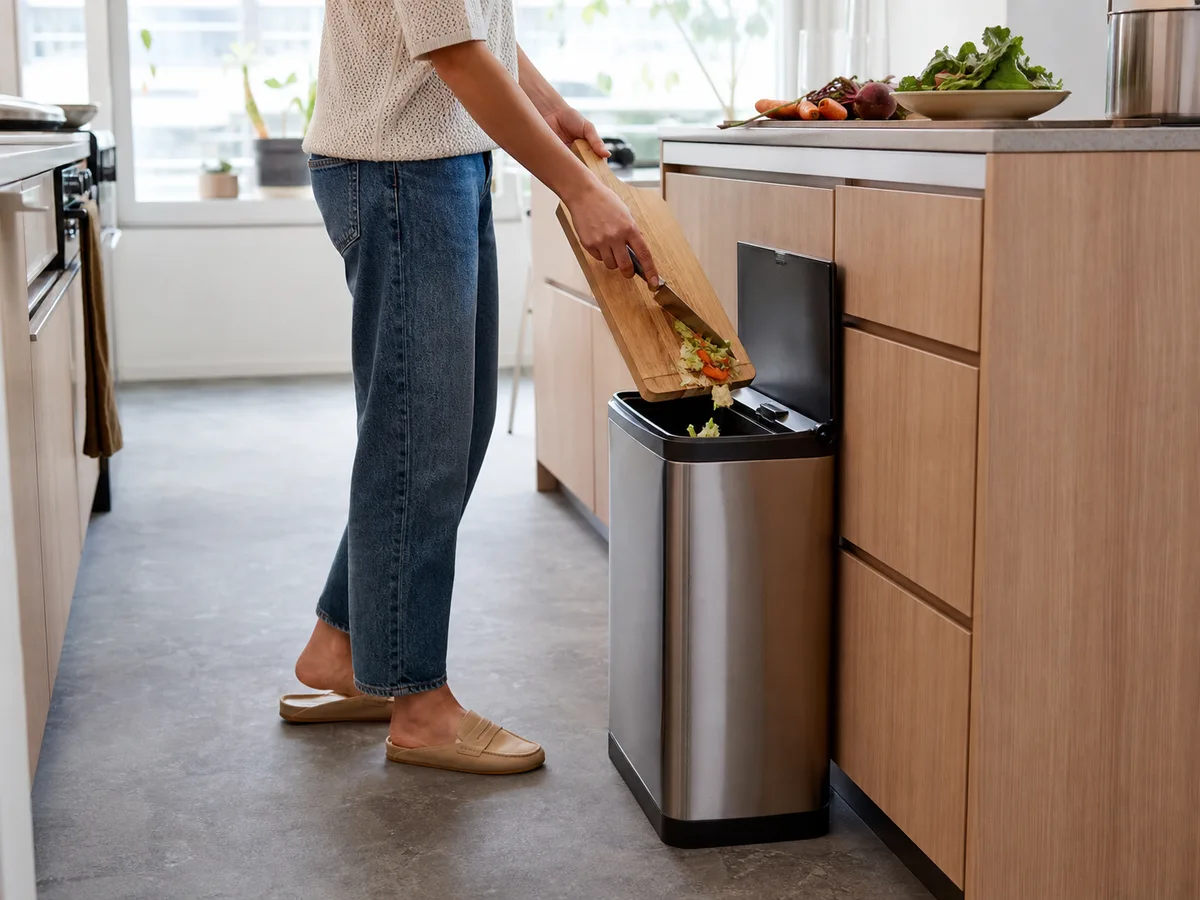
Slim step can
- Best for
- Galley kitchens and hands-busy cooking
- Tradeoff
- Tall narrow bags can be awkward to lift
Best sorting
Dual-compartment bin
- Best for
- Households with equal trash and recycling flow
- Tradeoff
- Each compartment fills sooner
Best hidden option
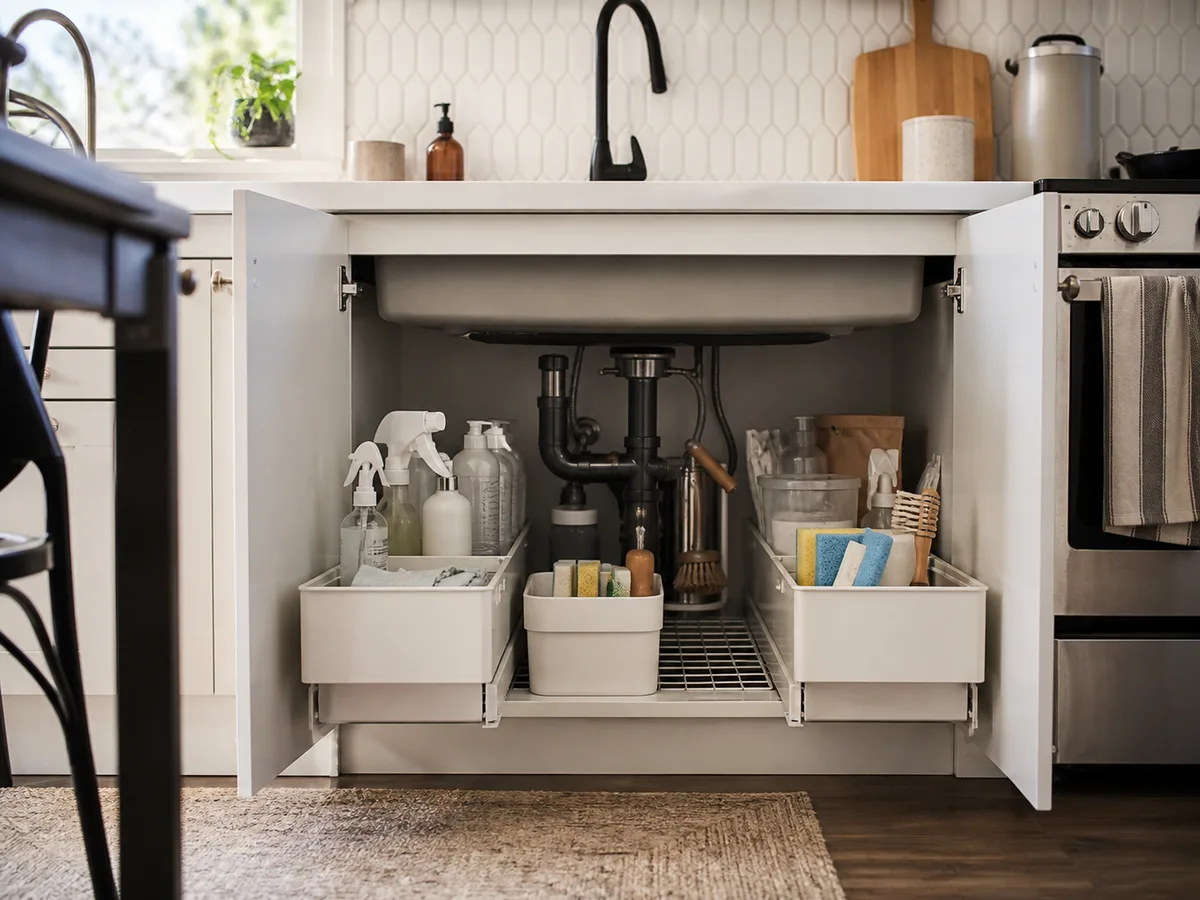
Under-counter pull-out bin
- Best for
- Clear base cabinet with good hardware
- Tradeoff
- Uses valuable cabinet space
Comparison at a Glance
| Option | Best fit | Main compromise |
|---|---|---|
| Slim step can | Galley kitchens and hands-busy cooking | Tall narrow bags can be awkward to lift |
| Dual-compartment bin | Households with equal trash and recycling flow | Each compartment fills sooner |
| Under-counter pull-out bin | Clear base cabinet with good hardware | Uses valuable cabinet space |
What to Look For
Fit and placement
Measure lid swing, pedal reach, walkway width, and full-bag removal path.
Everyday performance
Match capacity to collection schedule rather than choosing the largest possible bin.
Upkeep and durability
Check liner removal, inner corners, lid parts, and odor-trapping areas.
Total cost and flexibility
Include proprietary liners, filters, hinges, and replacement inner buckets.
Buying Advice for Real Homes
Begin with the narrow kitchen rather than the product page. Measure the available space, note nearby outlets or storage, and walk through the moment when you would actually use the a kitchen trash can. A feature is valuable only when it removes friction from that routine.
Compare the three product types above by the compromise you can live with. Check the current dimensions, included accessories, warranty, return window, and care instructions on the manufacturer or retailer page before ordering; those details can change and often matter more than a long feature list.
When possible, test the decision with what you already own: mark the footprint with tape, notice the room's normal noise level, and identify who will clean, charge, store, or adjust the a kitchen trash can. Buying for the least convenient day usually leads to a better long-term fit.
Mistakes Worth Avoiding
- Ignoring lid clearance
- Buying split compartments with the wrong ratio
- Overfilling until the bag tears
- Choosing a bin that cannot be washed easily
How We Build This Guidance
We map the purchase to realistic rooms and routines, review the product category’s published specifications, identify compatibility and maintenance questions, and explain tradeoffs without manufacturing scores or personal experience. Product availability and features change, so verify current details before buying.
Frequently Asked Questions
What capacity is best?
Estimate normal waste between collection trips and choose a size that can still be lifted comfortably.
Do odor filters work?
They can help, but frequent emptying, cleaning, and managing food waste remain more important.
Are custom liners necessary?
No, but check whether common bags fit securely and release without snagging.