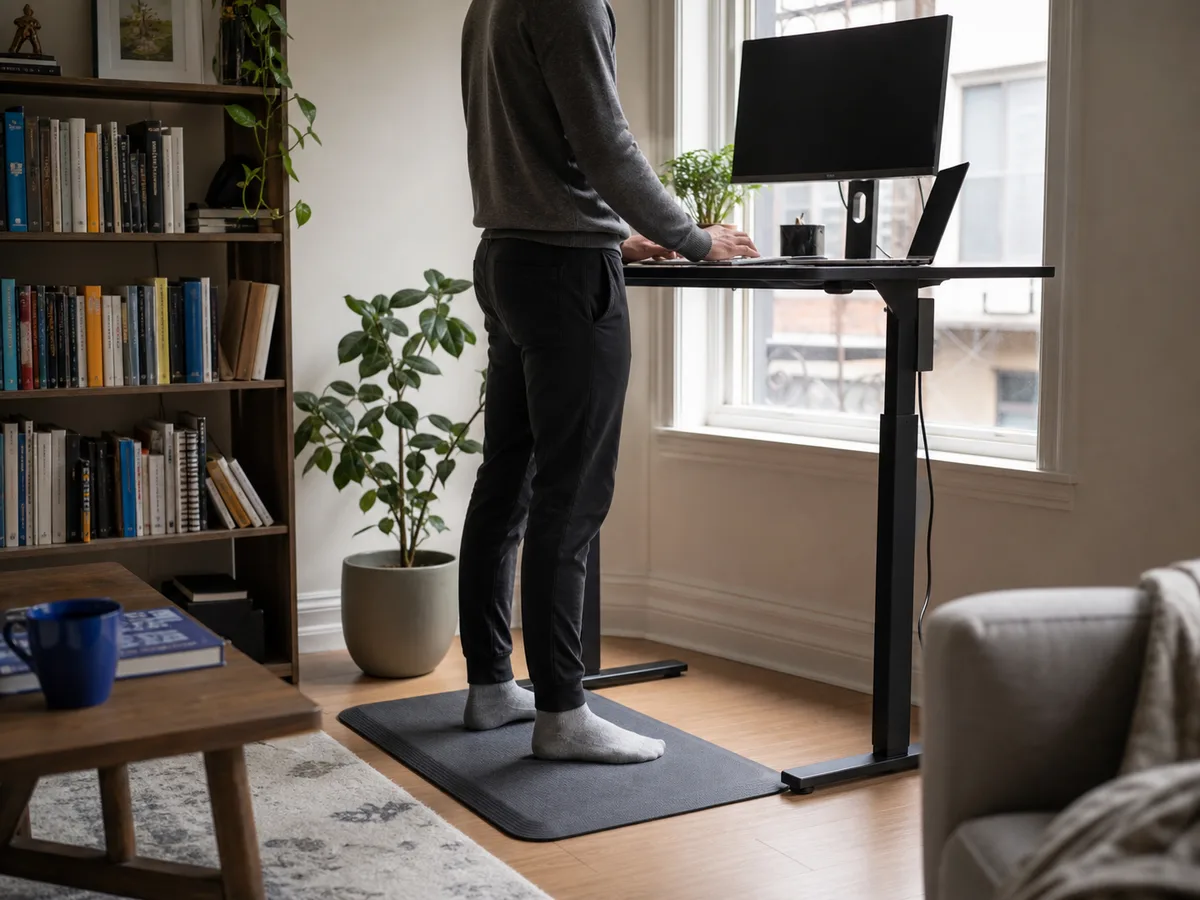
Meal prep and dishwashing leave your feet tired, but the narrow galley has swinging cabinet doors and a robot vacuum passing at night.
Our take: Choose a moderately cushioned, beveled, easy-clean mat sized for the task zone. Extra-thick foam is not automatically more comfortable or stable.
Quick Picks by Household Need
Use these product types as a starting point. The right model still depends on measurements, compatibility, and the current details on the retailer or manufacturer page.
Best kitchen routine
Beveled wipe-clean mat
- Best for
- Sink or prep station
- Tradeoff
- Covers only one work zone
Best longer movement
Low-profile runner mat
- Best for
- Galley kitchens and workbenches
- Tradeoff
- Harder to move and clean underneath
Best flexible placement
Compact portable mat
- Best for
- Alternating sit-stand locations
- Tradeoff
- Must be repositioned accurately
Comparison at a Glance
| Option | Best fit | Main compromise |
|---|---|---|
| Beveled wipe-clean mat | Sink or prep station | Covers only one work zone |
| Low-profile runner mat | Galley kitchens and workbenches | Harder to move and clean underneath |
| Compact portable mat | Alternating sit-stand locations | Must be repositioned accurately |
What to Look For
Fit and placement
Check door sweeps, toe kicks, walking path, and exact task position.
Everyday performance
Look for stable support and edges that do not create a trip transition.
Upkeep and durability
Confirm the surface tolerates spills and the underside suits the floor.
Total cost and flexibility
Consider warranty exclusions, edge wear, and whether one or two zones matter.
Buying Advice for Real Homes
Begin with the home kitchen rather than the product page. Measure the available space, note nearby outlets or storage, and walk through the moment when you would actually use the a standing mat. A feature is valuable only when it removes friction from that routine.
Compare the three product types above by the compromise you can live with. Check the current dimensions, included accessories, warranty, return window, and care instructions on the manufacturer or retailer page before ordering; those details can change and often matter more than a long feature list.
When possible, test the decision with what you already own: mark the footprint with tape, notice the room's normal noise level, and identify who will clean, charge, store, or adjust the a standing mat. Buying for the least convenient day usually leads to a better long-term fit.
Mistakes Worth Avoiding
- Buying thickness instead of stability
- Letting an edge cross a doorway
- Using the wrong backing on finished floors
- Ignoring cleaning underneath
How We Build This Guidance
We map the purchase to realistic rooms and routines, review the product category’s published specifications, identify compatibility and maintenance questions, and explain tradeoffs without manufacturing scores or personal experience. Product availability and features change, so verify current details before buying.
Frequently Asked Questions
How thick should it be?
There is no universal answer; stable moderate cushioning and personal comfort matter more than maximum thickness.
Can a robot vacuum cross it?
Some can manage low beveled edges, but test the actual combination and set boundaries if needed.
Will it solve foot pain?
It may improve comfort, but persistent pain deserves professional guidance and broader ergonomic review.