Two people arrive with wet shoes, delivery bags pass through the same doorway, and a deep cabinet would make the already narrow hall feel tighter.
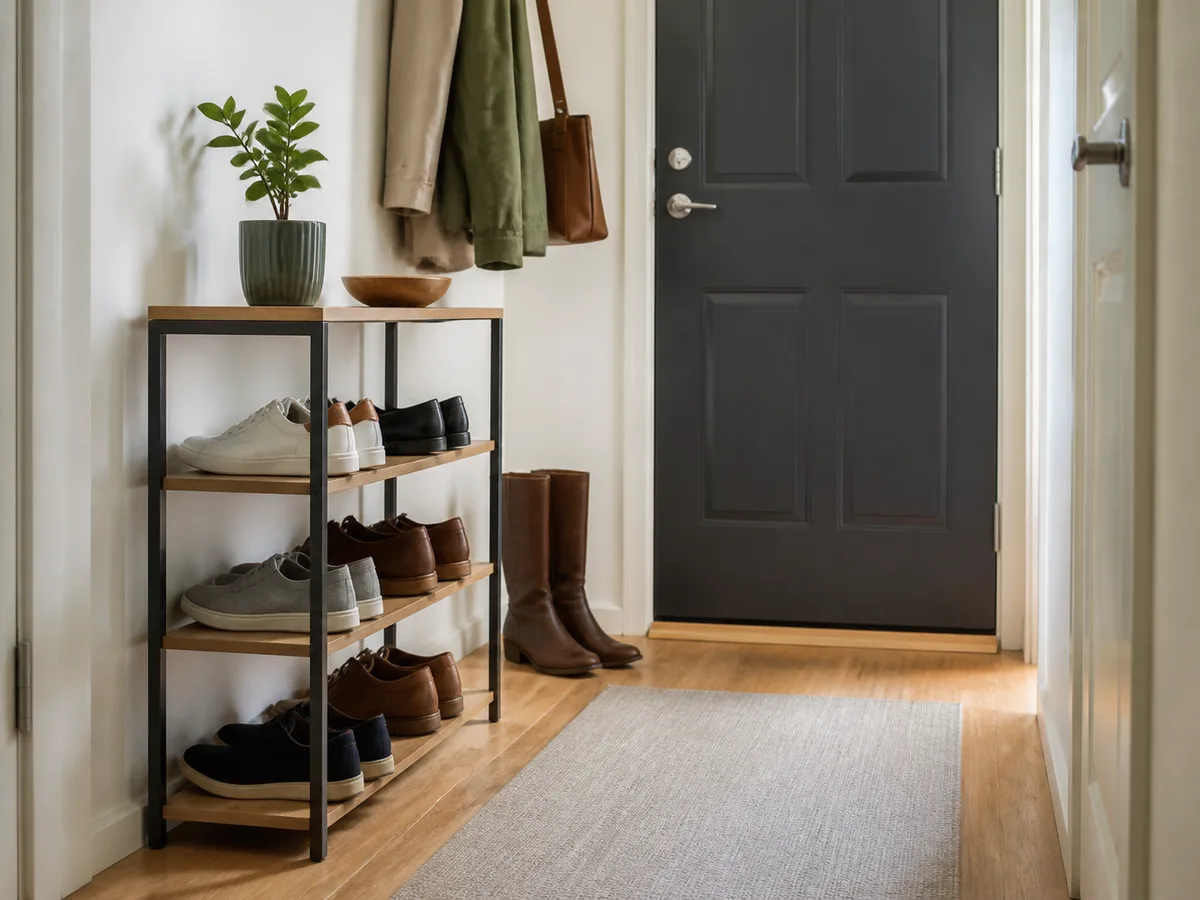
Our take: A shallow open rack is the most forgiving choice for daily shoes and airflow. Use a closed cabinet when visual calm matters, but verify door swing, ventilation, and fit for larger footwear.
Quick Picks by Household Need
Use these product types as a starting point. The right model still depends on measurements, compatibility, and the current details on the retailer or manufacturer page.
Best daily access
Shallow open shoe rack
- Best for
- Frequently worn shoes and damp weather
- Tradeoff
- Pairs remain visible and collect dust
Best visual calm
Slim tilt-out shoe cabinet
- Best for
- Narrow halls with compatible footwear
- Tradeoff
- Boots and large sizes may not fit
Best flexible household
Bench with open shoe shelf
- Best for
- Seated shoe changes and mixed ages
- Tradeoff
- Uses more floor depth than a simple rack
Comparison at a Glance
| Option | Best fit | Main compromise |
|---|---|---|
| Shallow open shoe rack | Frequently worn shoes and damp weather | Pairs remain visible and collect dust |
| Slim tilt-out shoe cabinet | Narrow halls with compatible footwear | Boots and large sizes may not fit |
| Bench with open shoe shelf | Seated shoe changes and mixed ages | Uses more floor depth than a simple rack |
What to Look For
Fit and placement
Measure walkway width, baseboards, door swing, largest shoe length, and the wall area needed for anti-tip hardware.
Everyday performance
Count everyday pairs rather than the entire wardrobe and test whether tall, wide, or muddy footwear fits the openings.
Upkeep and durability
Choose wipeable shelves, removable drip trays, and enough airflow for shoes to dry before enclosed storage.
Total cost and flexibility
Consider wall anchoring, replacement shelves, moving-house flexibility, and whether a bench adds real value.
Buying Advice for Real Homes
Begin with the narrow apartment entryway rather than the product page. Measure the available space, note nearby outlets or storage, and walk through the moment when you would actually use the entryway shoe storage. A feature is valuable only when it removes friction from that routine.
Compare the three product types above by the compromise you can live with. Check the current dimensions, included accessories, warranty, return window, and care instructions on the manufacturer or retailer page before ordering; those details can change and often matter more than a long feature list.
When possible, test the decision with what you already own: mark the footprint with tape, notice the room's normal noise level, and identify who will clean, charge, store, or adjust the entryway shoe storage. Buying for the least convenient day usually leads to a better long-term fit.
Mistakes Worth Avoiding
- Reducing the entry path below a comfortable width
- Counting pairs without measuring the largest shoes
- Closing damp footwear inside an unventilated cabinet
- Skipping anti-tip guidance on a tall narrow unit
How We Build This Guidance
We map the purchase to realistic rooms and routines, review the product category’s published specifications, identify compatibility and maintenance questions, and explain tradeoffs without manufacturing scores or personal experience. Product availability and features change, so verify current details before buying.
Frequently Asked Questions
How many pairs should stay at the door?
Keep the shoes used during a normal week nearby and move occasional or seasonal pairs to deeper storage.
Are tilt-out cabinets good for boots?
Many are too shallow or short for boots, so compare internal dimensions with the actual footwear.
Do open racks cause odor?
Airflow helps shoes dry, but the rack and footwear still need regular cleaning and wet pairs should not be crowded.