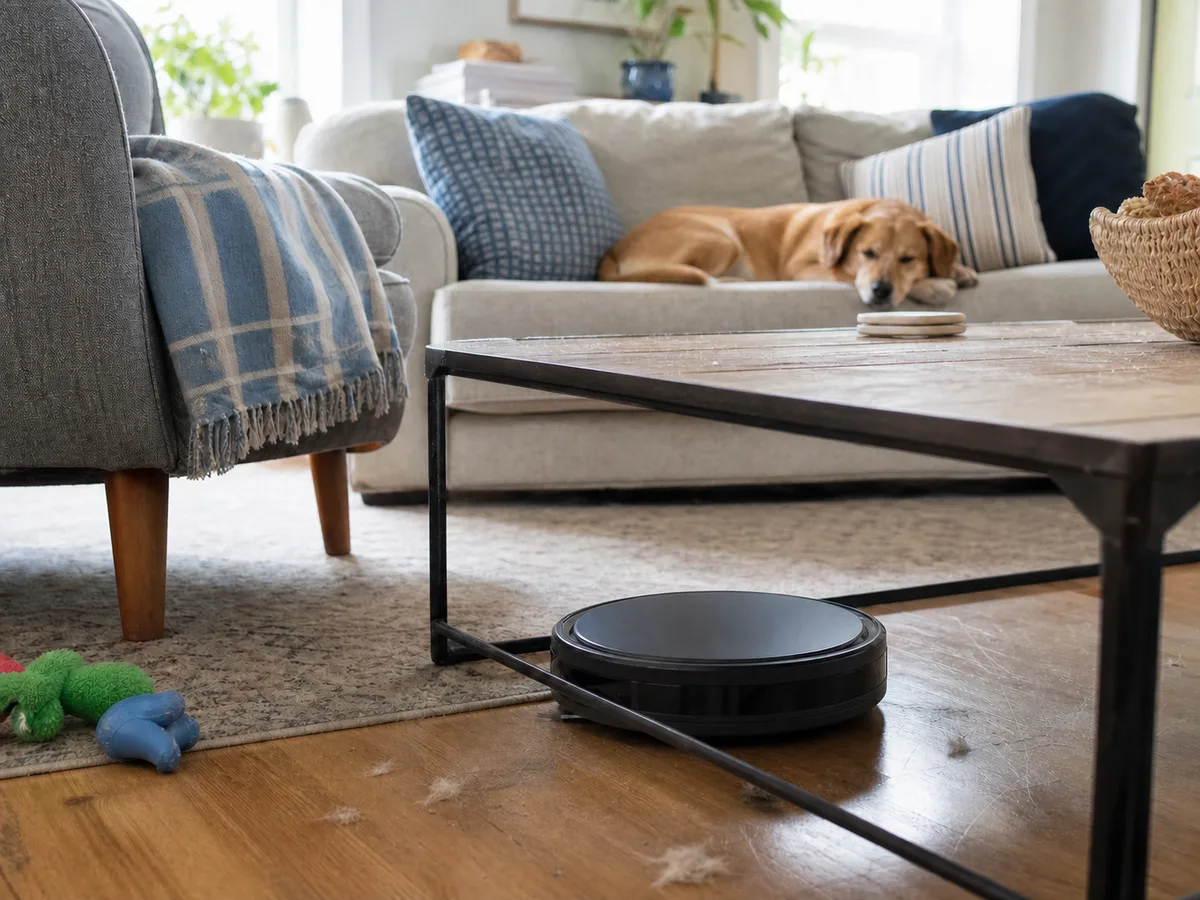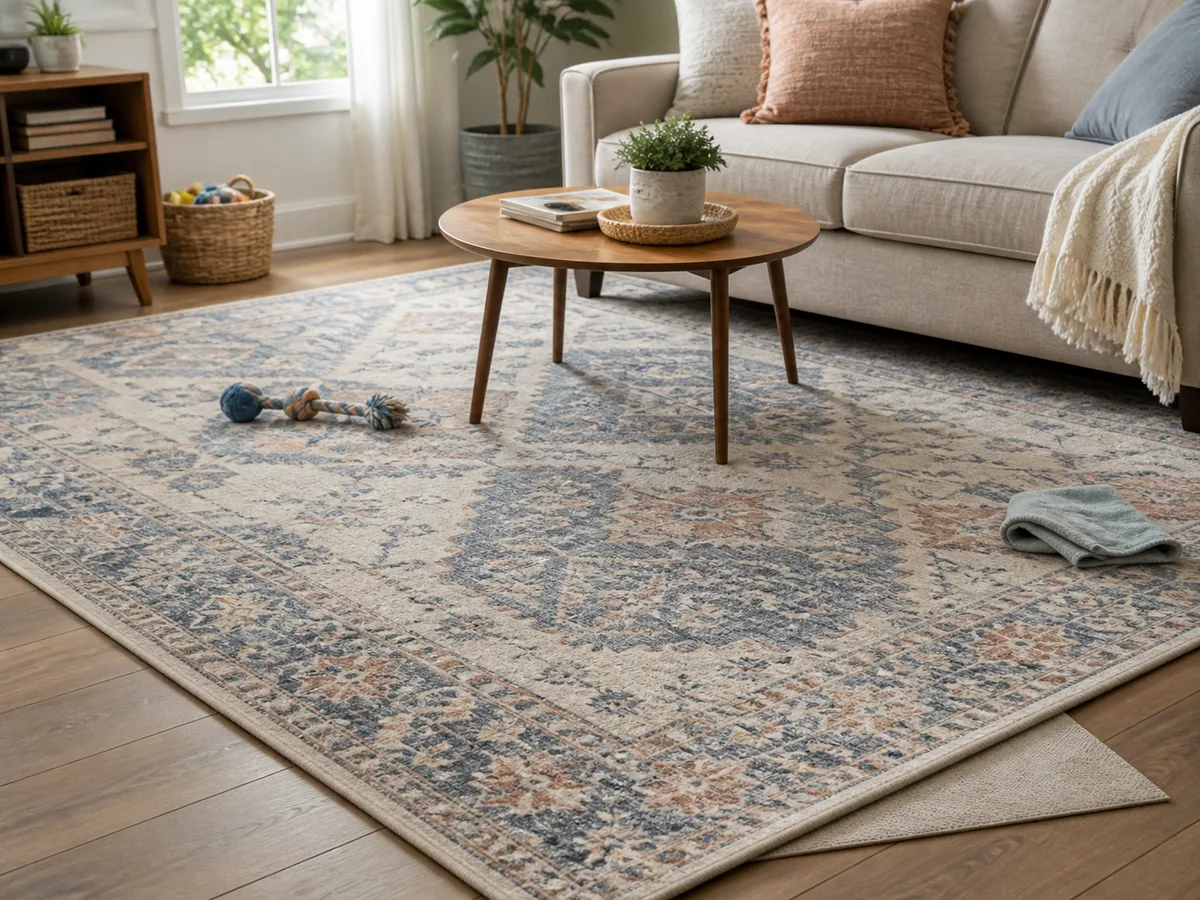
A child, dog, or muddy entry creates frequent small spills, but sending a large rug out for cleaning every time is not practical.
Our take: Choose a low-pile washable rug sized for the home’s actual washer and drying method. Two-piece cover systems suit larger rooms when repositioning the cover is easier than washing a heavy one-piece rug.
Quick Picks by Household Need
Use these product types as a starting point. The right model still depends on measurements, compatibility, and the current details on the retailer or manufacturer page.
Best simple wash day
One-piece low-pile rug
- Best for
- Small rooms, runners, and nearby laundry
- Tradeoff
- Larger sizes become heavy and bulky when wet
Best larger room
Removable rug-cover system
- Best for
- Living areas needing a separate grippy pad
- Tradeoff
- Aligning the cover takes time and floor space
Best entry routine
Washable runner with nonslip backing
- Best for
- Hallways, kitchens, and door zones
- Tradeoff
- Backing needs floor-compatible care
Comparison at a Glance
| Option | Best fit | Main compromise |
|---|---|---|
| One-piece low-pile rug | Small rooms, runners, and nearby laundry | Larger sizes become heavy and bulky when wet |
| Removable rug-cover system | Living areas needing a separate grippy pad | Aligning the cover takes time and floor space |
| Washable runner with nonslip backing | Hallways, kitchens, and door zones | Backing needs floor-compatible care |
What to Look For
Fit and placement
Map furniture legs, door clearance, walking edges, floor vents, and the route from the room to the washing machine.
Everyday performance
Compare pile height, edge construction, pad behavior, stain visibility, and how the surface feels under normal traffic.
Upkeep and durability
Confirm washer capacity, cycle instructions, detergent limits, drying space, and whether the rug can be handled safely when wet.
Total cost and flexibility
Include the required pad, possible commercial-laundry trips, floor-protection guidance, and replacement-cover availability.
Buying Advice for Real Homes
Begin with the family living room rather than the product page. Measure the available space, note nearby outlets or storage, and walk through the moment when you would actually use the a washable area rug. A feature is valuable only when it removes friction from that routine.
Compare the three product types above by the compromise you can live with. Check the current dimensions, included accessories, warranty, return window, and care instructions on the manufacturer or retailer page before ordering; those details can change and often matter more than a long feature list.
When possible, test the decision with what you already own: mark the footprint with tape, notice the room's normal noise level, and identify who will clean, charge, store, or adjust the a washable area rug. Buying for the least convenient day usually leads to a better long-term fit.
Mistakes Worth Avoiding
- Assuming washable means the home washer can handle it
- Ignoring door clearance and curling edges
- Using a backing that conflicts with floor-care guidance
- Buying a pale pattern for a high-soil route without a cleaning plan
How We Build This Guidance
We map the purchase to realistic rooms and routines, review the product category’s published specifications, identify compatibility and maintenance questions, and explain tradeoffs without manufacturing scores or personal experience. Product availability and features change, so verify current details before buying.
Frequently Asked Questions
Can every washable rug go in a dryer?
No. Follow the rug’s current care label; size, backing, and heat limits may require air drying or a low setting.
Do I still need a rug pad?
Some rugs include an attached backing, while others require a separate pad for grip, comfort, or the intended system.
What size is easiest to wash?
The largest size that fits the washer and can be moved, dried, and repositioned safely is more useful than a room-filling rug that cannot be cleaned at home.