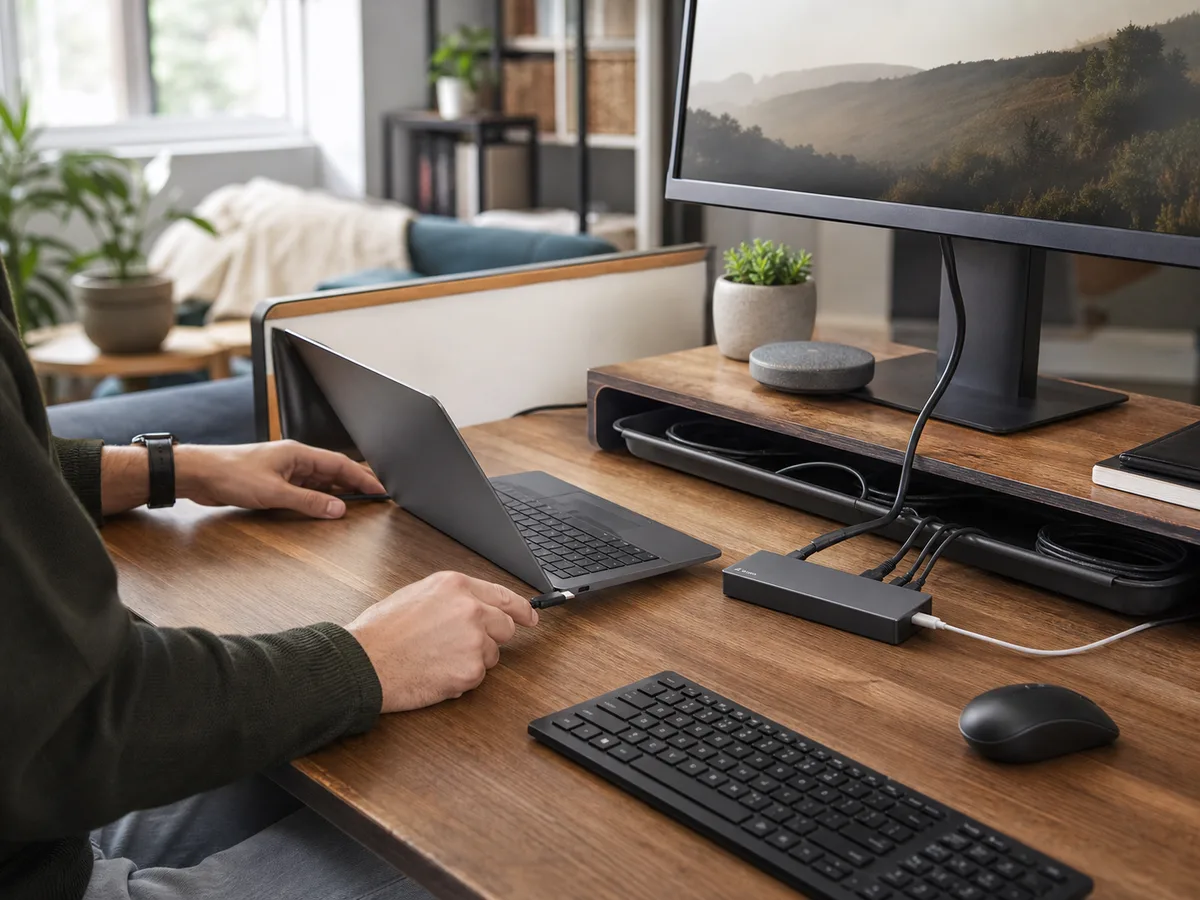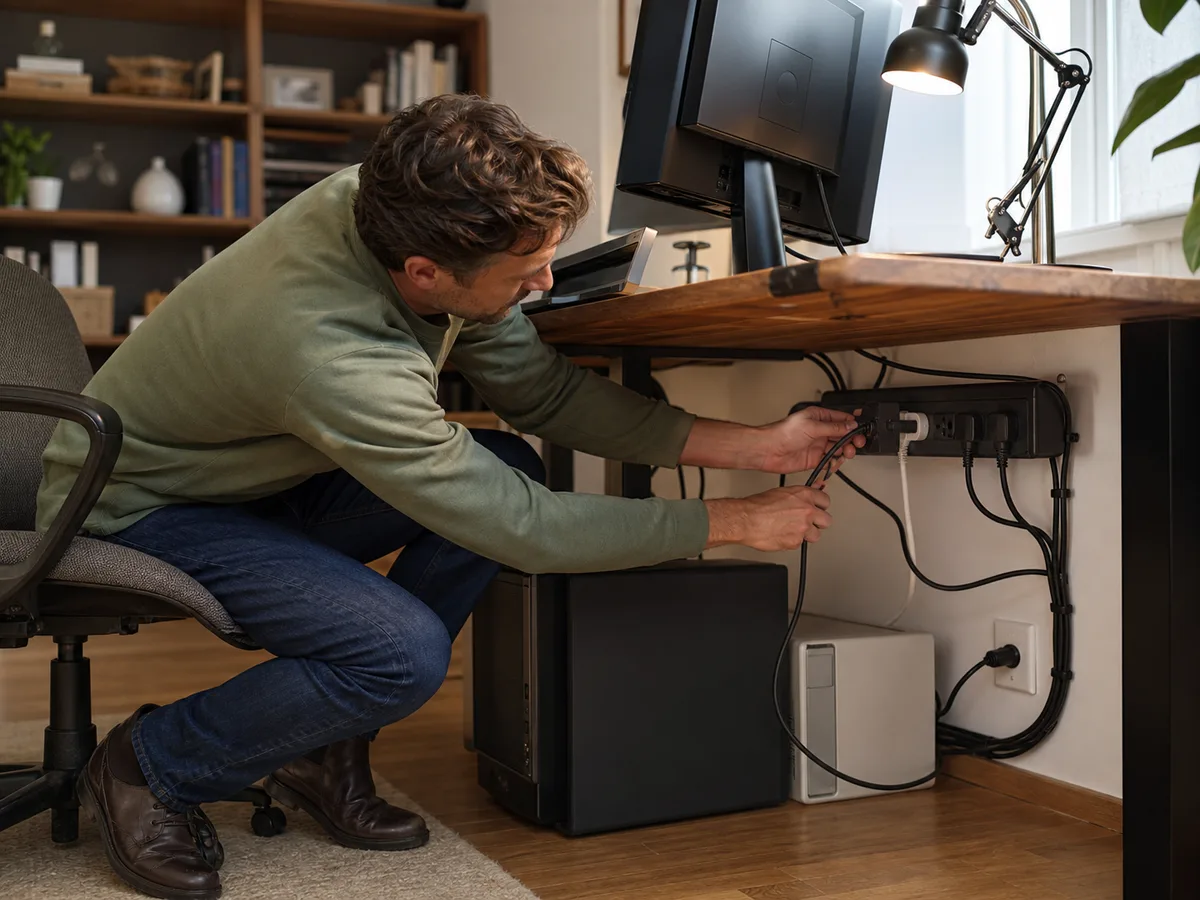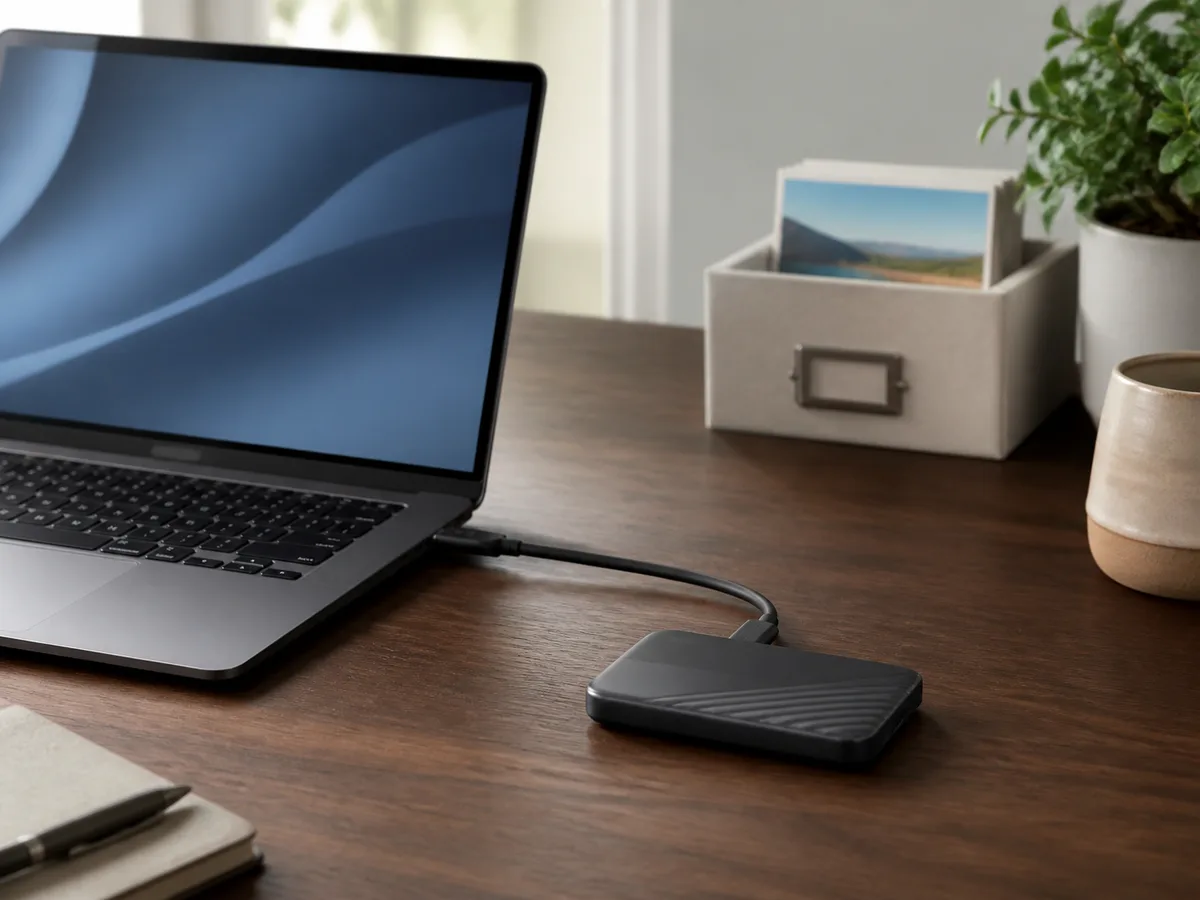
Family photos fill a laptop, project files travel between two computers, and the current backup is an old drive that is rarely connected or checked.
Our take: A mainstream portable SSD with enough room for current data plus growth is the practical choice. Buy for the computer’s real port speed, then make the drive one part of a backup plan rather than the only copy.
Quick Picks by Household Need
Use these product types as a starting point. The right model still depends on measurements, compatibility, and the current details on the retailer or manufacturer page.
Best everyday backup
Mainstream portable SSD
- Best for
- Laptop backups, photos, and household documents
- Tradeoff
- Costs more per terabyte than a desktop hard drive
Best large archive value
Desktop external hard drive
- Best for
- Stationary multi-terabyte backups
- Tradeoff
- Slower, less portable, and mechanically vulnerable
Best fast project drive
High-speed USB4 or Thunderbolt SSD
- Best for
- Large media files on compatible computers
- Tradeoff
- Premium speed is wasted on slower ports
Comparison at a Glance
| Option | Best fit | Main compromise |
|---|---|---|
| Mainstream portable SSD | Laptop backups, photos, and household documents | Costs more per terabyte than a desktop hard drive |
| Desktop external hard drive | Stationary multi-terabyte backups | Slower, less portable, and mechanically vulnerable |
| High-speed USB4 or Thunderbolt SSD | Large media files on compatible computers | Premium speed is wasted on slower ports |
What to Look For
Fit and placement
Choose a cable path and a dry, stable location where the drive can connect without hanging from a laptop port.
Everyday performance
Match the interface to the computer, file sizes, and workflow instead of treating the largest advertised number as universal.
Upkeep and durability
Plan safe ejection, occasional file verification, drive-health checks, and physical protection during travel.
Total cost and flexibility
Budget for at least one additional copy because no single external drive is a complete backup strategy.
Buying Advice for Real Homes
Begin with the home office desk rather than the product page. Measure the available space, note nearby outlets or storage, and walk through the moment when you would actually use the an external solid-state drive. A feature is valuable only when it removes friction from that routine.
Compare the three product types above by the compromise you can live with. Check the current dimensions, included accessories, warranty, return window, and care instructions on the manufacturer or retailer page before ordering; those details can change and often matter more than a long feature list.
When possible, test the decision with what you already own: mark the footprint with tape, notice the room's normal noise level, and identify who will clean, charge, store, or adjust the an external solid-state drive. Buying for the least convenient day usually leads to a better long-term fit.
Mistakes Worth Avoiding
- Keeping the only copy of important files on the external drive
- Paying for an interface the computer cannot use
- Leaving the supplied cable unidentified in a drawer
- Assuming a successful backup means files can be restored
How We Build This Guidance
We map the purchase to realistic rooms and routines, review the product category’s published specifications, identify compatibility and maintenance questions, and explain tradeoffs without manufacturing scores or personal experience. Product availability and features change, so verify current details before buying.
Frequently Asked Questions
How much capacity should I buy?
Start with the data currently protected, add expected growth, and leave room for the backup software’s version history.
Is an SSD better than a hard drive for backup?
SSDs are compact and fast, while hard drives often offer more capacity per dollar; redundancy and regular use matter more than either medium alone.
Should the drive stay connected?
It depends on the backup schedule and threat model. A disconnected copy can reduce exposure to accidents or malware, but it must be reconnected often enough to stay current.