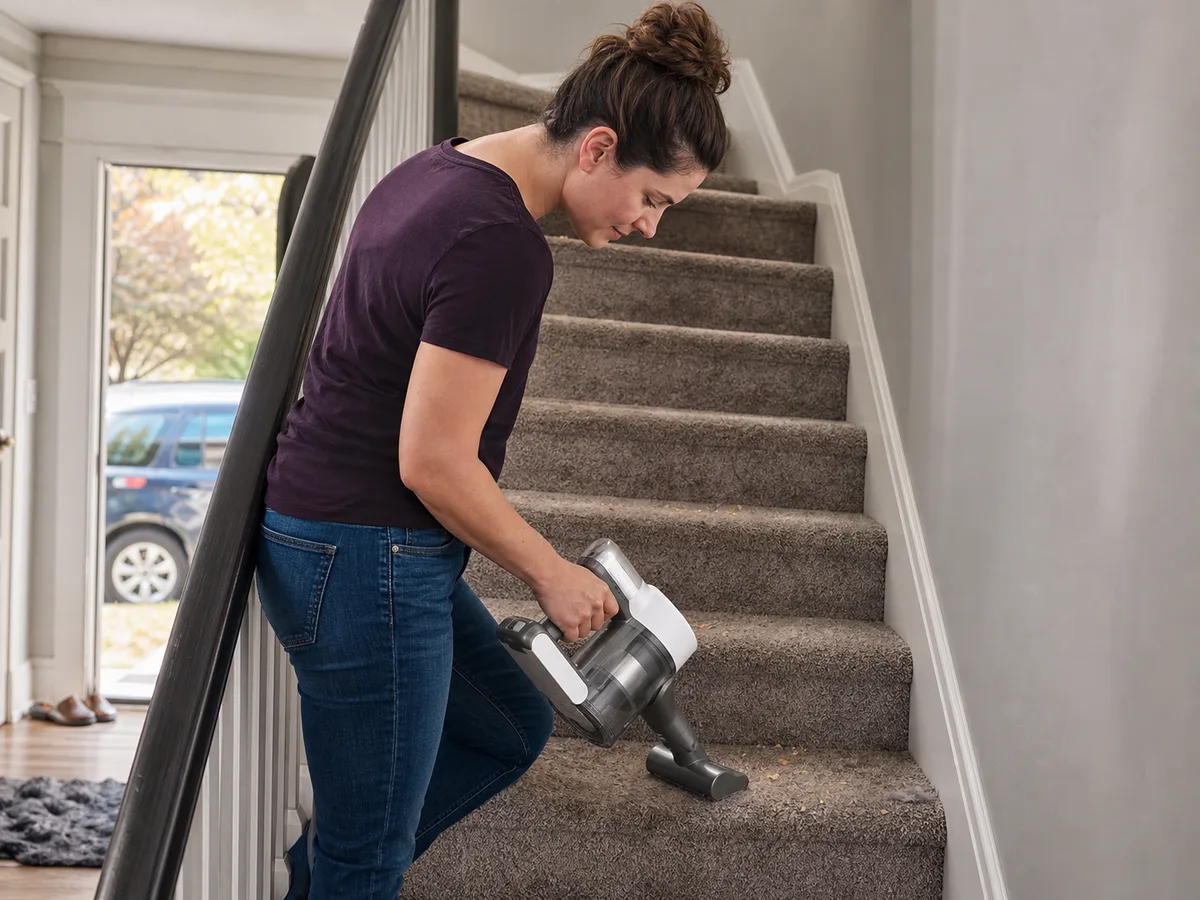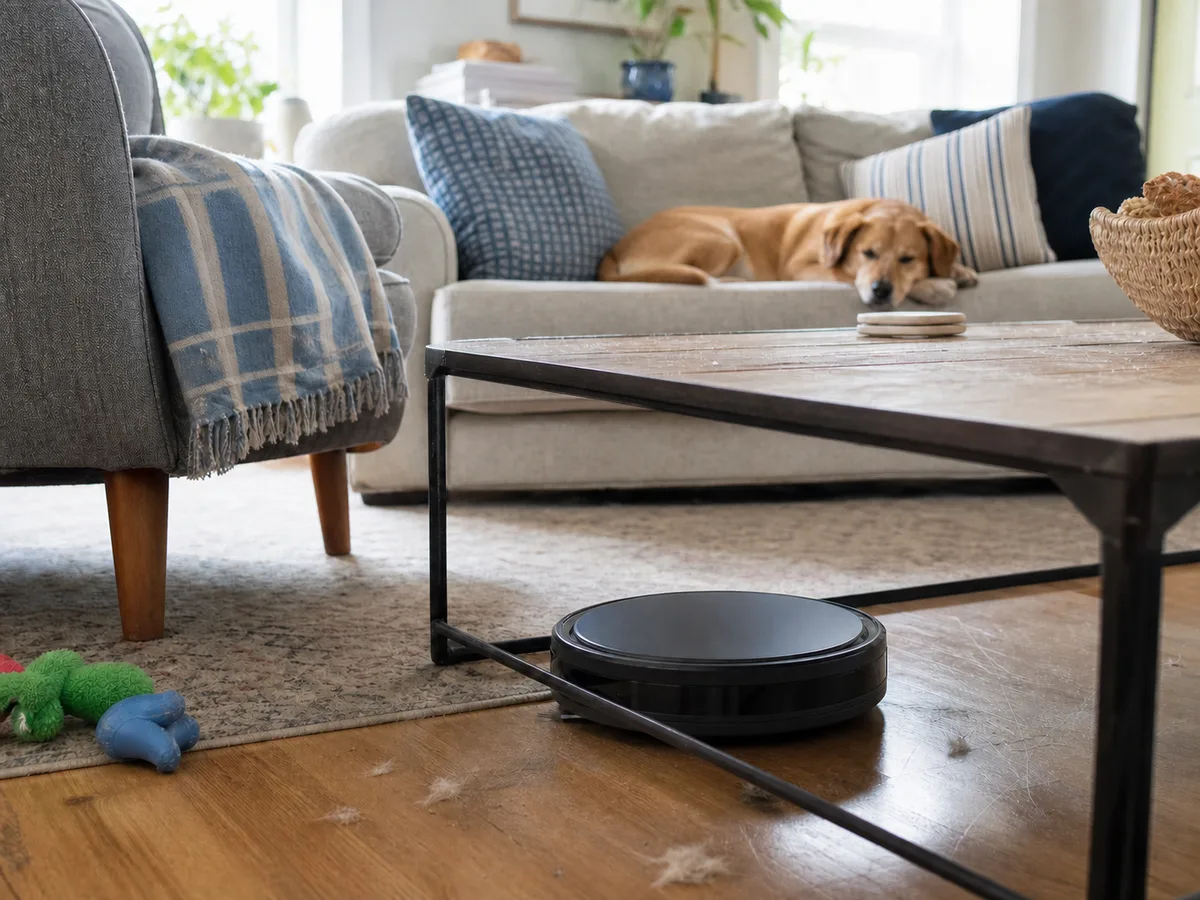
A kitchen with everyday footprints, a living-room rug and a dock under a shelf create three separate questions: is wet cleaning suitable, can the robot protect the rug, and can you service its station? Use the comparison below to identify a workable routine. The model names illustrate published features rather than tested winners or an exhaustive product list.
Comparison at a Glance
Published examples checked November 21, 2026. A mechanism, lift dimension or automatic-care label does not establish stain removal, dry carpet pickup or reliable passage in your home.
| Feature | Fresh-water roller | Dual spinning pads | Vibrating pad |
|---|---|---|---|
| Cleaning action | A rotating roller presents a moving wet surface; refresh arrangements depend on the model. | Two round pads rotate against the floor. | A pad vibrates against the floor as the robot travels. |
| Published example | eufy Omni E25: HydroJet self-cleaning roller. | Roborock Saros 10R: dual spinning mops. | Roborock Q10 S5+: VibraRise 2.0 vibrating mop. |
| Rug plan in that example | E25 guidance: vacuum-only on short-pile carpet; avoid medium/long pile. Dark rugs require no-go planning. | Saros 10R: automatic mop removal for vacuum-only/carpet tasks must be enabled in the app. | Q10 S5+: published 8 mm mop lift. Check rug pile and settings; lift is not a clearance guarantee. |
| Included station distinction | E25 station offers dust emptying, roller washing and drying. | Saros 10R station offers dust emptying and mop care. Check the tank-based or plumbing bundle. | Q10 S5+ RockDock Plus empties dust; mop care remains manual. |
| Owner work to inspect | Roller, accessible water path, dirty-water tank and station. | Pads, pad mounts, wash area and any water tanks. | Pad removal, washing, drying and the separate dust system. |
Quick Picks by Household Need
Use these product types as a starting point. The right model still depends on measurements, compatibility, and the current details on the retailer or manufacturer page.
A refreshed cleaning surface
A roller system with documented in-run care
- Best for
- Compatible hard-floor routes where that refresh routine is useful
- Tradeoff
- Roller and water-path cleaning remain owner tasks
A deliberate mixed-floor route
Pads with verified lift or removal behavior
- Best for
- Homes where keeping wet parts off rugs decides the purchase
- Tradeoff
- Check settings, pile, fringe and the route to the dock
Dust handling before mop automation
A vibrating mop with an auto-empty station
- Best for
- Buyers content to wash and dry the mop themselves
- Tradeoff
- An auto-empty station does not wash the mop
What to Look For
Start with permission to wet-clean the floor
Check the flooring supplier’s care instructions for the surface and finish you actually have. A robot’s hard-floor label is not approval for every wood, laminate, grout or coating. Establish the permitted water and cleaning-solution routine before comparing pad motion. If the floor guidance excludes the intended treatment, choose a compatible method instead. We have not assessed your flooring or tested material compatibility.
Separate scrubbing, surface refresh and the result
Rollers, spinning pads and vibrating pads move differently. That describes the mechanism, not what remains afterward. Seek a documented comparison with similar flooring, mess, settings and passes. Consider edges and reachable areas too. Movement, pressure claims and station equipment do not establish a universal winner.
Make the rug route explicit
Draw the path from the dock through each wet-cleaning area. Note rugs that must be crossed, fringes, narrow passages and any dark or lightweight mats. Then check the robot’s supported avoidance, lifting or removal behavior. A robot may need a particular cleaning mode or an app setting, and it may skip some carpets altogether. If the route cannot work with those limits, plan separate cleaning zones or another tool.
Read the complete station function list
Automatic dust transfer, mop washing, drying, robot refilling and household plumbing describe different jobs. Check the exact included bundle and which tasks are performed automatically. A larger station is useful when it takes over a chore you regularly face and you have room to service it. Measure space for removing tanks and bags, not only its footprint. Published station functions are not a maintenance-free ownership promise.
Compare access before paying for more automation
Picture lifting the mop parts out, reaching the wash area and carrying a dirty-water tank to the place you empty it. Check the cleaning instructions for each removable part and locate compatible replacement supplies. A routine that looks convenient in a diagram may be awkward under your shelf. We have not measured maintenance minutes, water use, consumable life or lifetime cost, so those outcomes should not be inferred from this comparison.
Buying Advice for Real Homes
If suitable hard floors dominate, identify the recurring job: routine footprints, the area around a dining table, or another supported mess. Compare the full cycle from preparing the floor to cleaning the mop afterward. A more automated station can suit frequent wet cleaning; manual mop care can be a sensible choice when that job is occasional. Choose the routine you expect to maintain on an ordinary busy day.
For rugs and pets, keep dry debris collection separate from wet cleaning. Hair handling depends on the brush, dust path and accessible floor area as well as the route. Wet litter and pet accidents require manual attention before a robot run. A mop mechanism does not establish reliable recognition of those messes, and a self-cleaning label is not permission to leave an uncertain floor unchecked.
Confirm the exact robot, station and settings in the current listing. Similar names can hide different mop modules or bundles. Shortlist prices and availability are dated separately from this feature review. Establish the ownership routine before comparing current offers.
After choosing a candidate, check the furniture-clearance and maintenance references linked above. For the first scheduled routes, observe how it handles the transitions you mapped and keep access to the station clear. Follow its instructions for care and floor preparation. Review the decision if the robot cannot reach the important area, cannot protect a rug as required or leaves you with maintenance you cannot comfortably perform.
Mistakes Worth Avoiding
- Assuming every roller continuously refreshes its cleaning surface in the same way.
- Treating a mop-lift figure as a guarantee that every rug remains dry.
- Buying an auto-empty dock while expecting it to wash and dry the mop.
- Confusing a tank-based station’s robot refilling with a household plumbing connection.
- Declaring a cleaning winner from the mechanism or manufacturer demonstration alone.
How We Build This Guidance
We map the purchase to realistic rooms and routines, review the product category’s published specifications, identify compatibility and maintenance questions, and explain tradeoffs without manufacturing scores or personal experience. Product availability and features change, so verify current details before buying.
This guide combines published US model information with editorial buying checklists. Sources were reviewed on November 21, 2026. We have not tested cleaning performance, floor compatibility, carpet protection, reliability or maintenance time. The examples describe different systems, not measured product rankings.
Sources for this guide
Reviewed .
- eufy US: Omni E25 roller, station functions and carpet-care FAQ
- Roborock US: Saros 10R dual spinning mops
- Roborock US: Saros 10R mop removal settings and station bundles
- Roborock US: Q10 S5+ vibrating mop, lift and auto-empty dock
Frequently Asked Questions
Is a roller robot mop better than spinning pads?
Neither mechanism is a universal winner. Compare the supported floors, how the cleaning surface is refreshed, the route across rugs and the care left to you. A relevant cleaning test is needed to establish better stain removal; we have not performed one.
Can a vibrating robot mop suit a hard-floor home?
It can be a candidate when its approved surface use, cleaning routine and included station fit your needs. The Q10 S5+ illustrates vibrating-pad cleaning with dust emptying and manual mop care. That combination should be compared as a complete routine, rather than assumed to be inferior from its mechanism.
Does automatic mop removal mean better carpet vacuuming?
Removal can separate a wet mop from a carpet-cleaning task. It does not measure how much embedded hair or debris the vacuum removes. Confirm the relevant setting and supported carpet first, then seek separate pickup evidence if carpet performance is the deciding factor.
Does a self-cleaning roller mean the station needs no care?
No. Read the exact model’s instructions for the roller, accessible water path, wash area, filters and tanks. Automated washing is one step within an ownership routine. Replacement supplies and manual cleaning remain part of the decision.
Can these robot mops be used on every wood or laminate floor?
Check the care requirements for your exact floor and finish, then the robot’s permitted surfaces, water and solution instructions. A generic hard-floor description does not establish compatibility with your installation. Choose another method when those requirements do not align.